Why One-Sided Exercises Belong in a Balanced Program
Split squats, single-arm rows, carries, and step-ups can train each side with less total load. Use them to broaden capacity—not to diagnose or erase normal asymmetry.
By Moow Editorial ·
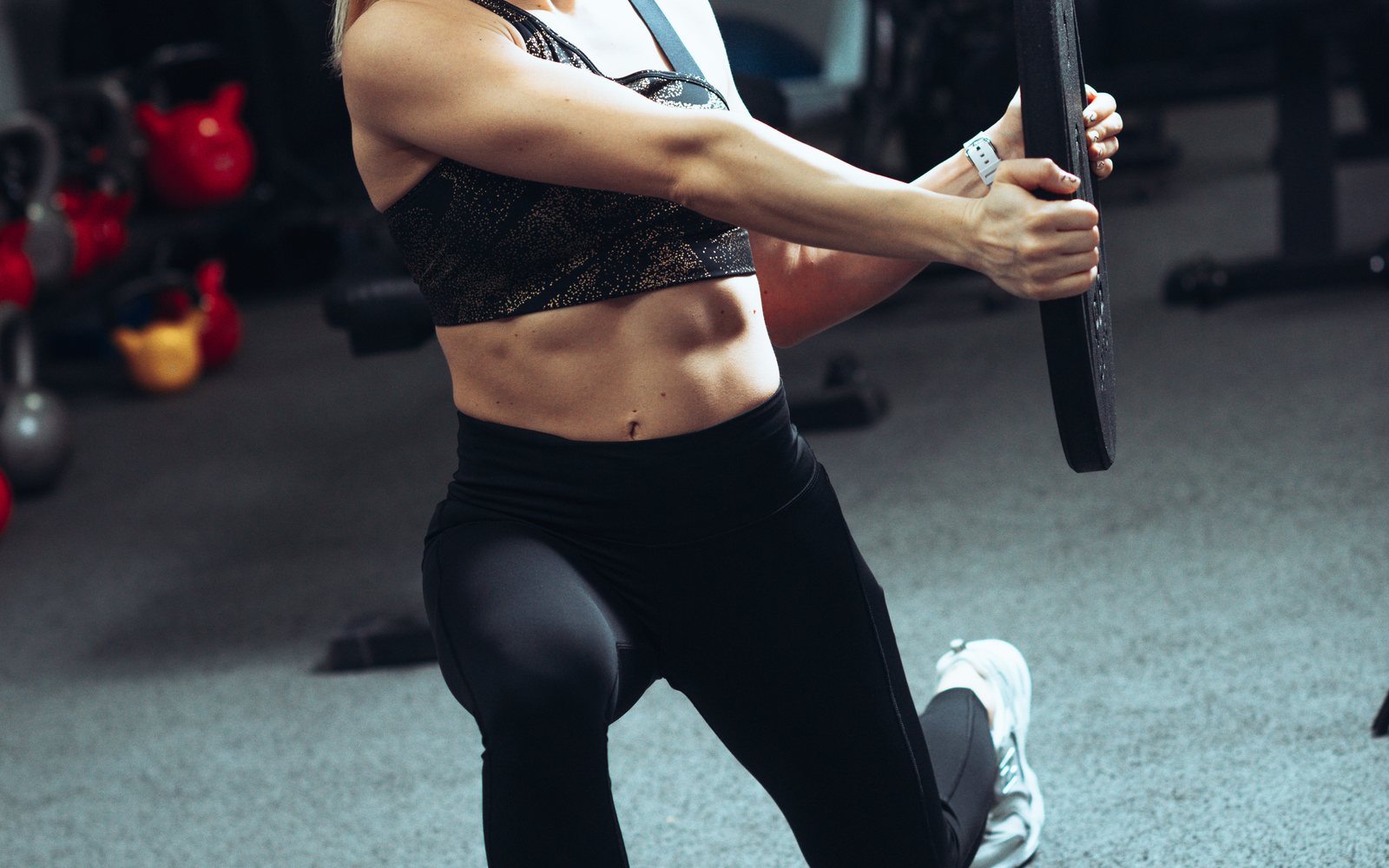

- Use unilateral exercises to train each side and expand movement options.
- Start with the less comfortable side and match controlled work rather than forcing extra repetitions.
- Treat large, painful, or worsening differences as assessment questions—not self-diagnoses.
One-sided work changes the problem
Bilateral exercises let both sides contribute to one task. Unilateral exercises place more of the work on one limb or ask one side to resist rotation and shifting. A split squat, step-up, single-arm press, one-arm row, and suitcase carry each create a different coordination demand while still training familiar movement patterns.
This can be useful when available weights are limited, when you want meaningful leg work with less total external load, or when daily activities and sports require one side to stabilize while the other moves. Unilateral training is not automatically more functional or superior. It is one tool that complements, rather than replaces, strong bilateral patterns.
Begin with enough support
Balance should not hide whether the target muscles are being trained. Hold a rack or wall for a split squat if wobbling ends the set before the legs are challenged. Use a staggered stance before a fully single-leg hinge. Support is a progression tool, not cheating. It lets you practice the intended range and load with fewer unrelated failures.
Choose one unilateral pattern per session at first and keep the volume modest. Start with the side that feels less coordinated, then match the repetitions on the other side. Matching prevents the comfortable side from continually setting a workload the other side cannot repeat. It does not require extra punishment for the side you label weak.
- Lower body: split squat, step-up, supported single-leg hinge.
- Upper body: one-arm row or press with a stable base.
- Whole body: suitcase carry with a controlled, level walk.
Notice differences without diagnosing them
Humans are not perfectly symmetrical. A small difference in balance, range, or repetition count can reflect practice history, anatomy, fatigue, or how the exercise was set up that day. Record a repeated pattern before deciding it is a problem. A single shaky set does not prove an imbalance, injury risk, or need for corrective exercise.
Use simple questions: Does one side consistently lose range? Is the difference growing? Is there pain, numbness, or a sense of giving way? A stable, painless difference may only need patient practice. A large, new, painful, or worsening difference deserves assessment by an appropriate clinician rather than an increasingly complicated self-designed correction plan.
An exercise can reveal a question. It cannot diagnose the answer.
Progress the pattern, not the wobble
First make the setup repeatable: same stance, support, range, and tempo on both sides. Then add repetitions within a range, increase load modestly, or reduce assistance when balance is itself a goal. Change one variable at a time. Moving immediately from a supported split squat to an unstable surface makes progress difficult to measure and may reduce useful loading.
Keep bilateral work if it serves your goals and feels appropriate. A week might include a squat as the main pattern and a split squat as targeted assistance. That combination gives you efficient whole-body loading plus practice controlling each side. The balanced program is the one whose exercises have distinct jobs and remain recoverable together. If the one-sided work starts reducing performance in higher-priority sessions, lower its dose rather than abandoning the whole pattern.
Sources
Use a stable support and clear floor space. Stop for sharp pain, numbness, sudden weakness, joint giving-way, or a new large side-to-side change, and seek professional assessment rather than training through those signs.