Use a Rowing Machine Without Racing the Damper
A higher damper setting is not a higher fitness score. Learn a repeatable rowing sequence, choose a manageable feel, and let effort rise through rhythm and force.
By Moow Editorial ·
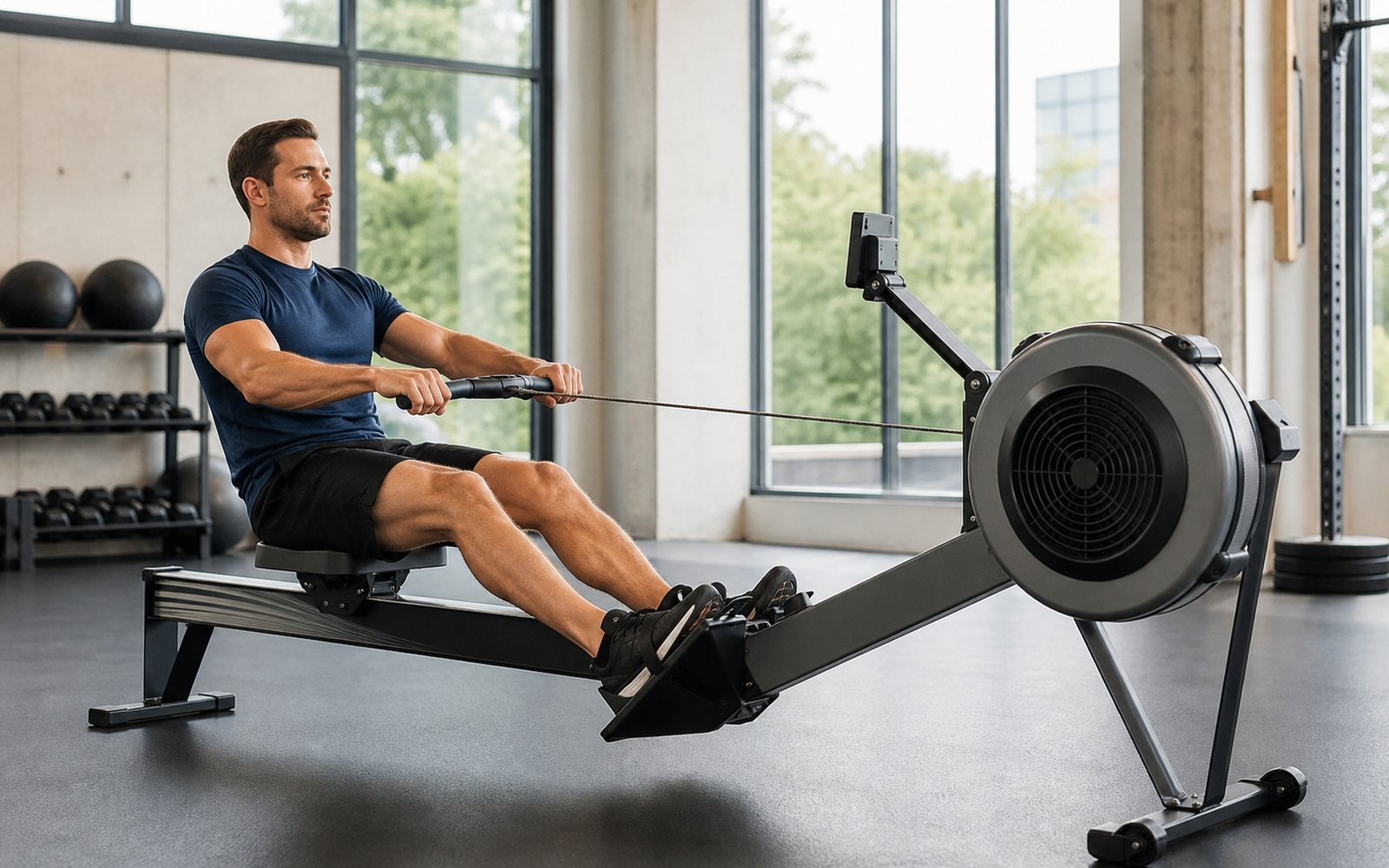
- Treat the damper as a feel adjustment, not a scoreboard.
- Sequence each stroke legs, body, arms—and reverse that order on the return.
- Build duration and rhythm before adding harder intervals.
The damper is not the difficulty button
The numbered lever on many air-resistance rowers changes how much air reaches the flywheel and therefore how heavy or light each stroke feels. It does not award extra training credit. A high setting can make the handle feel slow and demanding, while a moderate setting often makes it easier to learn rhythm and repeat sound strokes.
Your effort still depends largely on what you do: how forcefully you drive, how quickly you repeat strokes, and how long you continue. Begin with a comfortable middle-of-the-range feel, then adjust one step at a time. The useful setting is the one that lets you produce smooth work without yanking the handle or losing posture.
Build one stroke in the right order
At the catch, sit tall with shins near vertical, arms long, and shoulders relaxed. Drive the footplates away first. As the legs approach straight, open the hips slightly, then draw the handle toward the lower ribs. Keep wrists neutral and elbows traveling behind you rather than lifting toward the ceiling.
The recovery is the same sequence in reverse: send the hands away, hinge the torso forward from the hips, then bend the knees and roll toward the catch. Let this return take longer than the drive. That unhurried recovery creates space to breathe and prevents the seat from crashing into the heels.
Use rhythm before you chase numbers
For a first session, alternate a few easy minutes of rowing with brief pauses to reset technique. Use the talk test: at a moderate effort you can speak comfortably in sentences, even though breathing is clearly faster. Stroke rate, split time, watts, and distance are feedback—not targets that require you to sacrifice the sequence.
Once ten to twenty minutes feels organized, add small challenges. You might row six rounds of one minute purposeful and one minute easy, keeping the damper unchanged. Make the harder minute come from a stronger leg drive and a modestly quicker rhythm. If technique unravels, shorten the interval or lower the effort.
Finish with a useful review
Afterward, note the duration, approximate effort, and one technique cue that helped. Compare sessions only when settings and conditions are similar. Faster splits at the same perceived effort can show progress, but so can steadier breathing, quieter seat movement, or completing the same work with fewer form reminders.
Expect hands, forearms, trunk, and legs to contribute, but do not accept sharp joint pain, numbness, chest pressure, or dizziness as part of learning. Stop and reset when discomfort changes the stroke. Fitness grows from repeatable exposure; there is no prize for turning the lever up before your movement is ready.
Sources
Stop rowing and seek urgent care for chest pressure, fainting, or severe shortness of breath. If you have a current back, hip, knee, shoulder, or cardiovascular condition, ask an appropriate clinician how to modify the machine and effort before training.