Squat Depth: Use the Range You Can Control
There is no prize for forcing every squat to the same depth. Use the deepest range you can own today, then improve strength and confidence within it.
By Moow Editorial ·
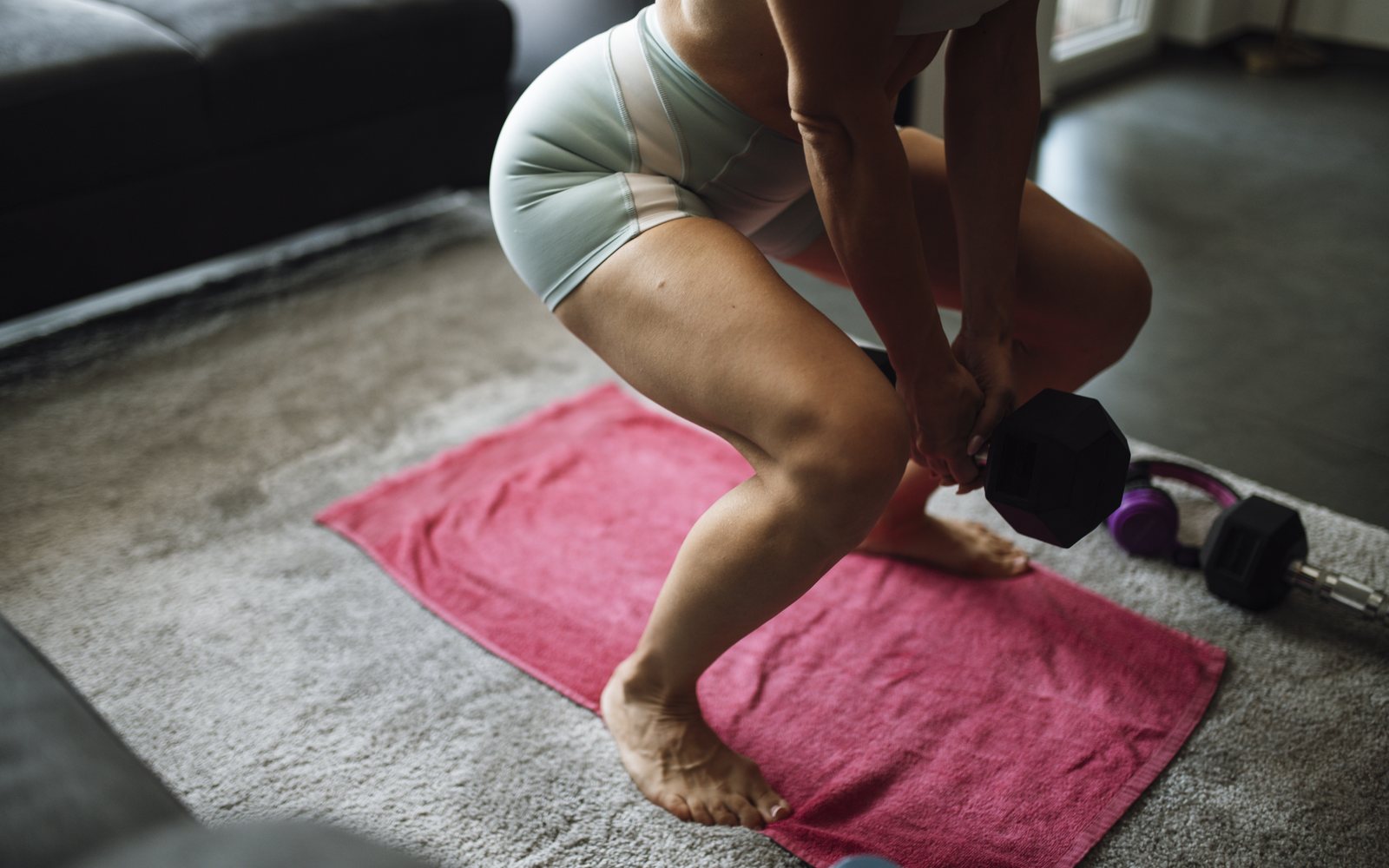

- Choose squat depth by control, comfort, and the purpose of the exercise.
- Use a target such as a bench to make a repeatable range visible.
- Progress range or load gradually instead of forcing both at once.
Depth is not a moral score
A squat can be useful at several depths. Hip structure, limb proportions, ankle motion, stance, footwear, training history, and the exercise variation all influence where a person can balance. One athlete may remain upright in a deep squat while another leans farther forward. Those differences do not automatically reveal good or bad mobility, and a single internet silhouette cannot set the right depth for every body.
Define a successful repetition by what stays controlled: the feet remain planted, the knees track in a comfortable path, the trunk stays braced, and the ascent resembles the descent. Mild muscular effort is expected. Pinching, sharp joint pain, a sudden loss of balance, or a range that changes dramatically from repetition to repetition is a reason to reduce depth and investigate the setup.
Use the deepest repeatable range you can control—not the deepest position you can briefly reach.
Find today's range with a target
Place a stable bench or box behind you and begin slightly higher than the depth you think you can manage. Sit the hips down between the feet until you touch the target lightly, then stand without rocking. Adjust stance width and toe angle by small amounts and keep the version that feels balanced. The target turns an invisible question—how low was that repetition?—into a repeatable practice point.
Film one set from the front-quarter angle if you want another view, but use the video to observe rather than diagnose. Check whether both feet stay connected to the floor and whether the same depth appears across repetitions. A heel wedge or lifting shoe can change ankle demands, but it is an equipment choice, not a cure. First confirm that a simpler stance or target adjustment does not solve the problem.
- Touch the target softly instead of collapsing onto it.
- Keep pressure across heel, big-toe base, and little-toe base.
- Stop the set when the range or balance is no longer repeatable.
Progress one variable at a time
Once the squat is consistent, choose either a little more range or a little more resistance. Lower the target by a small step while keeping the load the same, or keep the target fixed and add a modest load. Trying to deepen, load, and add repetitions in the same session makes it hard to know what caused technique to change. Hold the new version for several sessions before judging it.
Tempo can build control without forcing depth. Take two or three seconds to lower, pause briefly above the target, and stand smoothly. The slower descent exposes where balance is lost and keeps a light load challenging. It should not become a breath-holding endurance test; reset between repetitions when needed and finish the set with clean repetitions still available.
Range is a training variable, not a deadline.
Match depth to the person and the day
A shallower squat may be the right choice during a return from a layoff, when fatigue is high, or when the goal is to practice a pain-free pattern. A deeper range may be useful when it is comfortable and supports the training goal. Both can belong in one program. What matters is that the choice is deliberate and does not turn every session into a test of maximum mobility.
Persistent joint pain, catching, giving way, swelling, or a sudden loss of range deserves assessment rather than more stretching or heavier squats. A coach can help with stance and exercise selection, but cannot diagnose the source of symptoms from a video. Build the range you can use confidently, and let gradual exposure—not pressure from someone else's standard—guide the next step.
Sources
Do not force a painful or blocked range. Reduce depth or load and seek qualified assessment for swelling, locking, giving way, persistent pain, or symptoms after an acute injury. Use a stable target and appropriate rack safeties when squatting with external load.