Power Training for Everyday Adults: Earn Speed With Control
Power is the ability to apply force quickly. Build strength and movement skill first, then practice speed with light, controllable tasks and full recovery.
By Moow Editorial ·
- Establish stable technique and baseline strength before adding speed.
- Use light or moderate resistance that can move quickly without losing position.
- Keep power sets short and well rested so speed remains the trained quality.
Power is strength expressed quickly
Strength describes the ability to produce force; power includes how quickly that force is produced. Everyday examples include rising promptly from a chair, climbing a step, catching balance, or moving an object decisively. Power is not reserved for competitive athletes, and training it does not require reckless jumping or maximal Olympic lifts.
The entry requirements are control, an appropriate strength base, and a movement you can perform without symptoms. First learn the exercise at ordinary speed. If alignment changes, range collapses, or the load must be thrown unpredictably, the task is too demanding for useful speed work today.
Select a scalable expression of speed
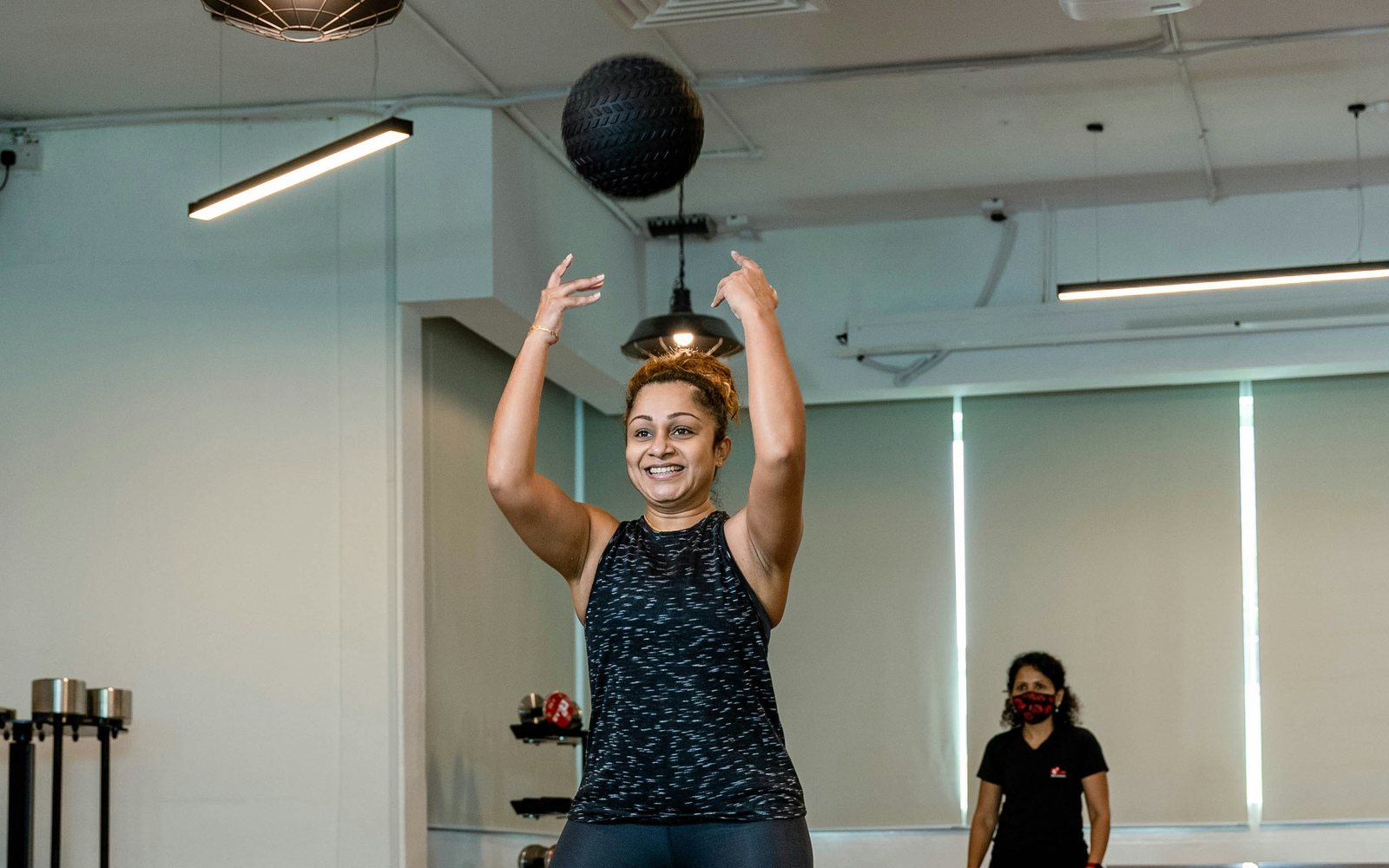
Options include a quick chair rise with a controlled sit, a medicine-ball chest pass, a cable or band press performed briskly, a light kettlebell deadlift with purposeful ascent, or a low step-up. The movement should have a safe finish and no need to catch a falling load.
Use resistance light enough to accelerate while preserving the planned path. Move the effort phase with intent, then control the return and reset. Intent matters: the object does not need to look dramatic. Beginners and older adults can start with low-complexity movements and stable support before considering hops, jumps, or throws.
Protect speed with short sets and rest
Power quality falls when fatigue slows movement. Use a few crisp repetitions, then rest long enough to repeat them with similar speed and position. Stop the set when the movement visibly slows, the landing grows noisy, or setup becomes rushed. This is skillful practice, not conditioning disguised as power work.
Place power exercises after a progressive warm-up and before high-fatigue strength or aerobic work. One or two movements are enough for an introduction. Keep the rest of the program familiar while you learn how joints, balance, and recovery respond to the new velocity demand.
Progress only one feature
Progress might mean a slightly quicker controlled rise, a modestly heavier ball, a more challenging stance, or an additional set. Do not increase load, complexity, height, and repetitions at once. Video or a coach can help confirm that greater effort did not quietly become worse mechanics.
Keep conventional strength, aerobic, and balance work in the week; power complements them. People with osteoporosis, unstable joint conditions, recent surgery, recurrent falls, or cardiovascular symptoms need individualized exercise selection. Speed should expand usable capacity, not outrun the control that makes it safe.
Sources
Obtain individualized guidance before ballistic, jumping, or fast loaded work if you have osteoporosis, recent surgery, unstable joints, recurrent falls, uncontrolled blood pressure, or cardiovascular disease. Stop for chest symptoms, faintness, sharp pain, sudden weakness, or loss of control.