Portion Awareness Without a Food Scale
You can make portions more visible without weighing every bite. Use repeatable plates, ordinary serving cues, and real feedback from hunger, energy, and trends.
By Moow Editorial ·
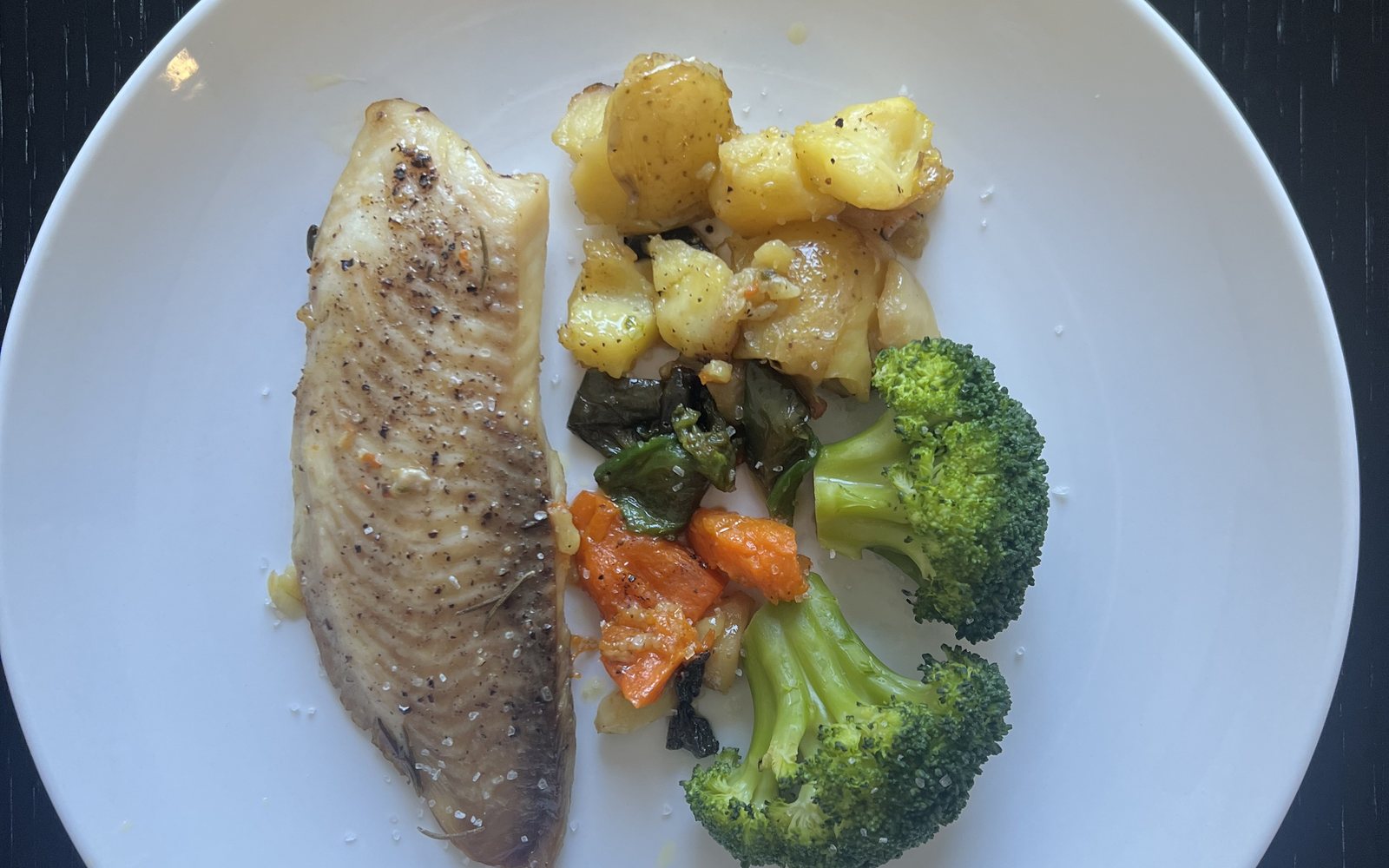

- Use a repeatable plate pattern to make meal balance visible.
- Calibrate energy-dense extras occasionally instead of weighing everything forever.
- Adjust portions from several weeks of hunger, energy, performance, and goal-relevant trends.
Separate a portion from a label serving
A serving size is the standardized amount used for a label or guideline. A portion is what you choose to eat. The two can differ without anyone breaking a rule. Your useful portion changes with body size, appetite, activity, meal timing, and the foods around it. Confusing a reference amount with a command can make ordinary eating feel unnecessarily exact.
Portion awareness means seeing the pattern clearly enough to make a decision. It is not an attempt to estimate every calorie by sight. Begin with meals you eat often, because repetition makes changes visible. A familiar bowl or plate can be a practical reference when its size and usual components remain reasonably consistent.
A portion is a decision in context, not a test against the package.
Use a flexible plate as the first draft
Start with a clear protein food, vegetables or fruit, and a carbohydrate source, then add fat and flavor. The exact fractions can move. A longer training day may call for more rice, pasta, bread, or potatoes. A low-appetite meal may use less volume and a more energy-dense sauce. Mixed dishes can meet the same structure without separating into tidy sections.
Serve once, sit down, and give the meal enough attention to notice it. If you remain hungry, take more. If fullness arrives early, save the rest when food safety permits. This pause is not a rule designed to limit intake; it is a way to separate the first automatic serving from the information that arrives while eating.
- Anchor the meal with protein and produce.
- Scale carbohydrate to appetite and activity.
- Use fat and flavor deliberately rather than invisibly.
Adjust from a pattern, not one plate
Review several weeks of hunger, fullness, energy, digestion, training quality, and any goal-relevant trend. If hunger is persistently high and performance is falling, smaller portions are unlikely to be the answer. If comfortable meals consistently overshoot an intended energy target, change one recurring component modestly and hold the rest steady long enough to learn.
Detailed portion control can worsen anxiety, restriction, or binge eating. Children, pregnancy, eating-disorder recovery, medically prescribed diets, and unexplained weight change require different care. If using a plate method makes you fear meals or ignore strong hunger, stop the experiment and seek qualified support. The method should make eating clearer, not smaller at any cost.
Sources
Portion frameworks are not treatment for eating disorders or medically prescribed diets. Stop if the method increases fear, compulsive checking, restriction, or binge eating. Children, pregnancy, eating-disorder recovery, and unexplained weight change require individualized nutrition guidance.