One-Hour Meal Prep: Build Flexible Components, Not Identical Boxes
In 60 focused minutes, prepare one protein, one grain or starch, two vegetables, and two fast flavors for different meals over the next several days.
By Moow Editorial ·
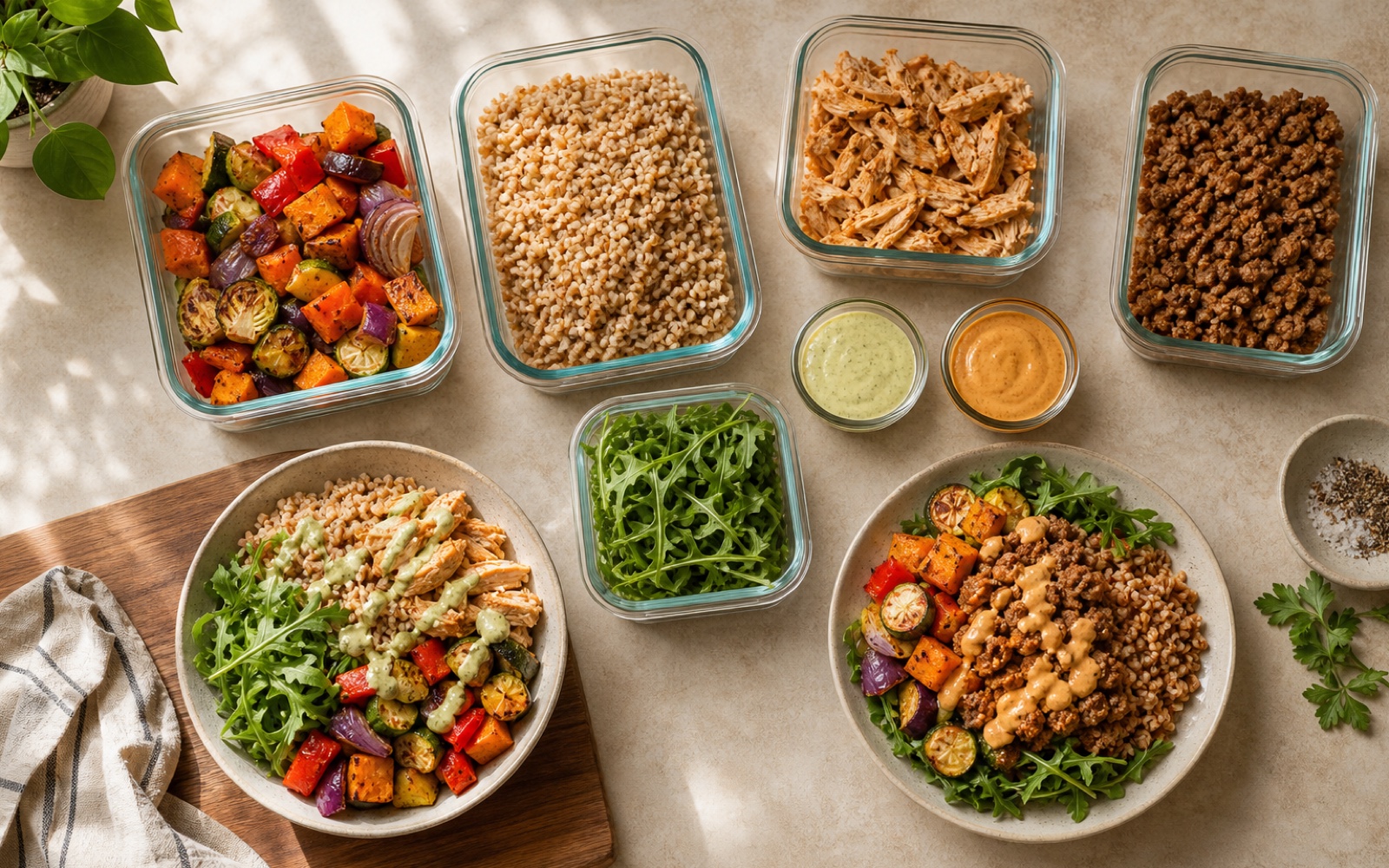
- Prepare versatile components rather than complete repeated meals.
- Use one oven tray and one stovetop pot to keep the hour realistic.
- Refrigerate near-term portions promptly and freeze later portions early.
Use a four-part component formula
A useful one-hour prep produces options, not seven copies of Sunday’s dinner. Choose one protein, one grain or starchy base, two vegetables, and two strong flavor elements. Add ready-to-eat foods—fruit, yogurt, bread, canned beans, eggs, or salad leaves—over the next several days rather than cooking every bite in advance.
For example: roast chicken thighs or tofu, cook a pot of rice, roast peppers and courgettes, wash leafy greens, then mix lemon-herb yogurt and a spicy tahini sauce. Those parts can become a bowl, wrap, salad, warm plate, or soup addition. Repetition stays efficient while the final meal changes.
Prep decisions and components; assemble the meal when you know what you want.
Run the kitchen on a 60-minute timeline
Minutes 0 to 10 are for heat and setup: start the oven, rinse the grain, put its pot on, and season the protein. Minutes 10 to 35 do the heavy lifting: roast the tray, simmer the grain, chop the second vegetable, and wash greens while the appliances work.
Minutes 35 to 50 are for flavor: stir two sauces, portion fruit or nuts, and check doneness. Use the final 10 minutes to cool food promptly, label containers, and clean the main tools. If a recipe requires constant attention or four pans, it does not belong in this particular hour.
- 0–10: preheat, start grain, season protein.
- 10–35: roast, simmer, chop, and wash.
- 35–50: mix sauces and prepare fresh additions.
- 50–60: cool, label, store, and reset the kitchen.
Turn one prep into four different meals
Meal one is a warm bowl: rice, protein, roasted vegetables, greens, and tahini. Meal two is a wrap with the same protein, fresh leaves, peppers, and yogurt sauce. Meal three adds canned chickpeas and fruit for a larger salad. Meal four drops rice and vegetables into broth for a fast soup.
This matrix also handles household differences. One person can use tofu while another adds chicken; one can take more rice after training while another adds greens. Keep components neutral enough to accept several flavors, then make sauces bold. Flexibility reduces the “healthy food versus food I want” conflict.
Change the format and flavor before assuming you need a completely new recipe.
Plan for the week you actually have
Check the calendar before shopping. Prep fewer portions if two dinners are out; freeze extras early if the week is uncertain. USDA meal-planning guidance recommends using what you already have, choosing a mix of fresh, frozen, and shelf-stable foods, and planning leftovers deliberately. That approach saves money as well as time.
Cool cooked food promptly in clean shallow containers. USDA guidance says to refrigerate perishable leftovers within two hours—one hour when the temperature is above 90°F (32°C)—and use refrigerated leftovers within three to four days. For meals planned later in the week, freeze portions promptly instead of treating seven days in the refrigerator as the default. Label dates, thaw safely, and follow the specific storage guidance for each ingredient.
- Schedule changed: freeze a portion early.
- Fresh produce fading: use it before shelf-stable items.
- One component untouched: buy less or choose a better-liked version.
Sources
Follow official food-safety instructions for cooking temperatures, rapid cooling, refrigeration, and reheating, especially for meat, seafood, eggs, and rice. Adapt ingredients for allergies and medically prescribed diets; never rely on smell alone to determine safety.