A No-Equipment Full-Body Plan That Actually Progresses
Train seven simple exercises two or three times a week, stop before form breaks, and change only one difficulty variable at a time.
By Moow Editorial ·
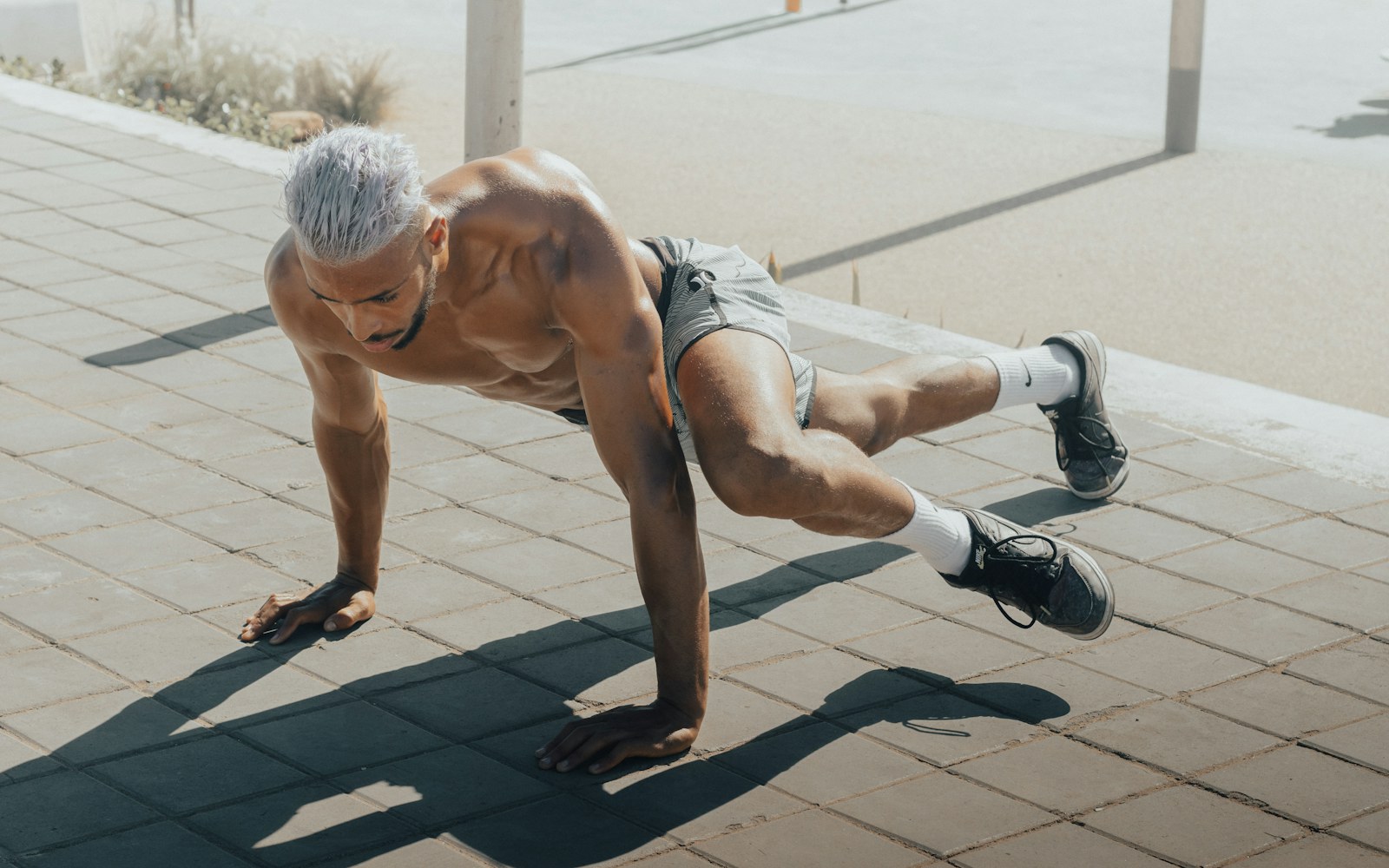
- A useful bodyweight plan trains legs, hips, pushing, the upper back, calves, and trunk.
- Repeat the same plan long enough to make its difficulty measurable.
- Progress one variable at a time and finish sets before technique unravels.
Start with one repeatable session
Do this full-body session two or three times per week with at least one easier day between demanding sessions. Choose a variation that lets you complete controlled repetitions while keeping roughly two or three good repetitions in reserve. When every set feels steady for two consecutive workouts, make one exercise slightly harder.
The goal is not exhaustion; it is a clear training signal you can reproduce. Updated ACSM guidance finds that bodyweight and home-based resistance work can improve strength and function. A short list of well-chosen movements is more useful than changing workouts daily because repetition lets you see whether capacity is actually improving.
Decision rule: repeat the plan if form is improving; progress it only after the current version is controlled.
Use seven movements that cover the body
Begin with one or two sets of each exercise and rest long enough to regain control of your breathing and technique. Work within a comfortable range rather than chasing a prescribed repetition count. A beginner may use five deliberate chair stands while another person needs fifteen squats to create a comparable challenge.
Move slowly enough to notice where control changes. Keep a note of the variation and clean repetitions completed. That log turns an equipment-free workout into a progressive program rather than a random circuit, and it makes clear when a household support or inexpensive band would meaningfully expand the plan.
- Chair sit-to-stand or free squat
- Supported split squat or reverse lunge
- Wall, counter, or floor push-up
- Hip bridge with a pause at the top
- Prone W raise for controlled upper-back work
- Calf raise
- Dead bug or side-plank variation
Progress without adding weight
First add a repetition or two while preserving the same range and tempo. Next, add a set, use a slightly larger range, lengthen a pause, or choose a variation with less assistance. For a squat, that could mean moving from a high chair to a lower target; for a push-up, moving from a wall to a counter.
Change only one variable so you know what produced the extra difficulty. Slowing every repetition, adding several sets, and switching to a harder variation at once creates soreness without giving useful information. Training to failure is not required for most general-fitness progress, and it often makes technique harder to judge.
Keep the exercise recognizable: a harder version should still look controlled from the first repetition to the last.
Know when bodyweight stops being the simplest option
Equipment-free pulling is difficult to load safely. Do not wedge towels into doors or hang from furniture that was not built for exercise. A long resistance band and approved anchor may eventually be the smallest sensible upgrade. Lower-body work can also become limited when very high repetition counts are needed to feel challenged.
Muscle effort, mild temporary fatigue, and a gradually rising breathing rate are expected; sharp pain, joint giving-way, numbness, chest discomfort, or dizziness are not goals. Scale the range or choose another variation. People returning after surgery, managing significant balance limits, or living with a condition affected by exercise should obtain an individualized starting plan.
Sources
Use only stable walls, counters, and chairs, and keep the floor clear. Stop for sharp or escalating pain, joint instability, numbness, dizziness, chest discomfort, or unusual breathlessness. Seek individualized guidance after surgery or when a health condition materially affects exercise safety.