Can a Meal Photo Count Calories Accurately?
A photo can shorten logging, but it cannot see hidden oil, recipe quantities, or weight. The responsible workflow is estimate, reveal uncertainty, and let the person correct it.
By Moow Product ·
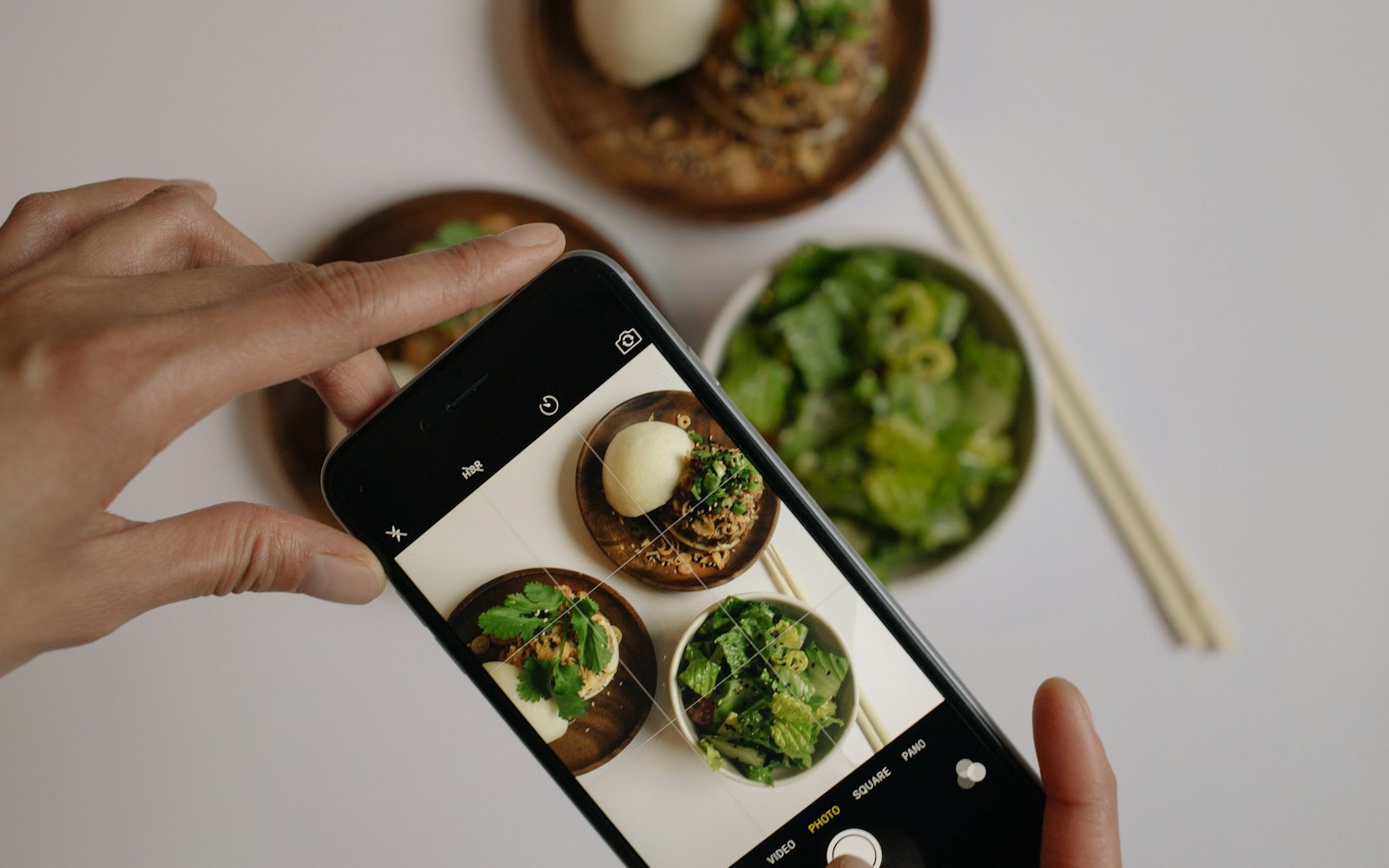
- An image may identify visible foods but usually cannot establish exact portions or recipes.
- Mixed dishes, hidden fats, and camera perspective create large uncertainty.
- Moow’s current build supports private upload and manual review; automatic analysis is not finished.
Recognition is not the same as measurement
A clear photo may help identify visible components: rice, grilled chicken, leafy vegetables, or a packaged drink. It can also preserve context that is easy to forget later. That makes image-based logging promising as a lower-friction first step. But calories and nutrients depend on identity, recipe, and quantity. A two-dimensional image rarely establishes all three with confidence.
Portion size is especially difficult without scale. A deep bowl hides volume; a wide-angle lens changes apparent size; two foods overlap; and a hand or fork provides only an inconsistent reference. Even perfect volume estimation would not reveal whether a tablespoon or three tablespoons of oil went into the pan. Visual similarity can also conceal meaningful differences, such as full-fat and low-fat sauces.
Mixed meals create stacked uncertainty
Consider a curry, smoothie, sandwich, or restaurant bowl. The system must infer ingredients, recipe proportions, serving size, and the correct database match. Each choice has a range. When those ranges are added together, a precise-looking calorie total can be misleading. Protein may be easier to approximate when a distinct portion is visible, while cooking fats and dense toppings can remain almost invisible.
The interface should therefore avoid false decimals and unsupported certainty. Useful output might say “likely rice, chicken, and vegetables,” ask for bowl size, and highlight the ingredients most likely to change the estimate. The person should be able to replace the food match, change the serving, and add a missing sauce before saving. Fast correction is more honest than pretending the first result is complete.
- Hard to see: oils, dressings, sugar, ingredients blended into sauces.
- Hard to size: deep bowls, stacked foods, cropped plates, shared dishes.
- Hard to identify: visually similar products, recipes, and plant-based substitutes.
- Useful follow-up: serving size, preparation method, brand, and missing extras.
What Moow’s photo flow does today
The current development flow lets a user select a meal image, opens a meal form marked as estimated, and uploads the file through an authenticated private-upload path when a connection is available. The user must add or correct the meal name and nutrition before saving. If upload fails, the local preview can remain while the meal entry is completed on the device.
Automatic image-to-nutrition analysis is part of the planned product direction, not a finished capability in the current code. The existing form’s “estimated” label is a workflow guardrail, not proof that a model generated valid numbers. Until an analysis service is implemented and evaluated, Moow should say that the photo is ready for review rather than imply that calories have been calculated.
The photo should remove typing—not remove the person’s ability to inspect the estimate.
What must be true before automatic estimates ship
A production feature needs testing across cuisines, lighting, plate styles, mixed dishes, portion sizes, devices, and foods that are underrepresented in training data. Accuracy should be measured separately for identification, portion estimation, calories, and macronutrients. The app also needs a clear fallback when confidence is low: search the food database, scan a barcode, or enter the meal manually.
Privacy is part of accuracy because people should know whether an image leaves the device, where it is stored, and how to delete it. Moow’s architecture uses a private meal-image bucket for chosen uploads, but exact production retention and analysis behavior must be documented before launch. A meal photo is personal data; convenience does not make informed permission optional.
Sources
Never use a photo estimate to manage food allergies, insulin dosing, a therapeutic diet, or another condition where ingredient or carbohydrate accuracy affects safety. Verify labels, recipes, and portions with the appropriate professional guidance.