Massage Guns: Use Less Pressure Than the Marketing Suggests
Percussive massage can briefly change how a muscle feels, but the evidence is limited and harder pressure is not a shortcut to recovery. Start low, stay on muscle, and stop early.
By Moow Editorial ·
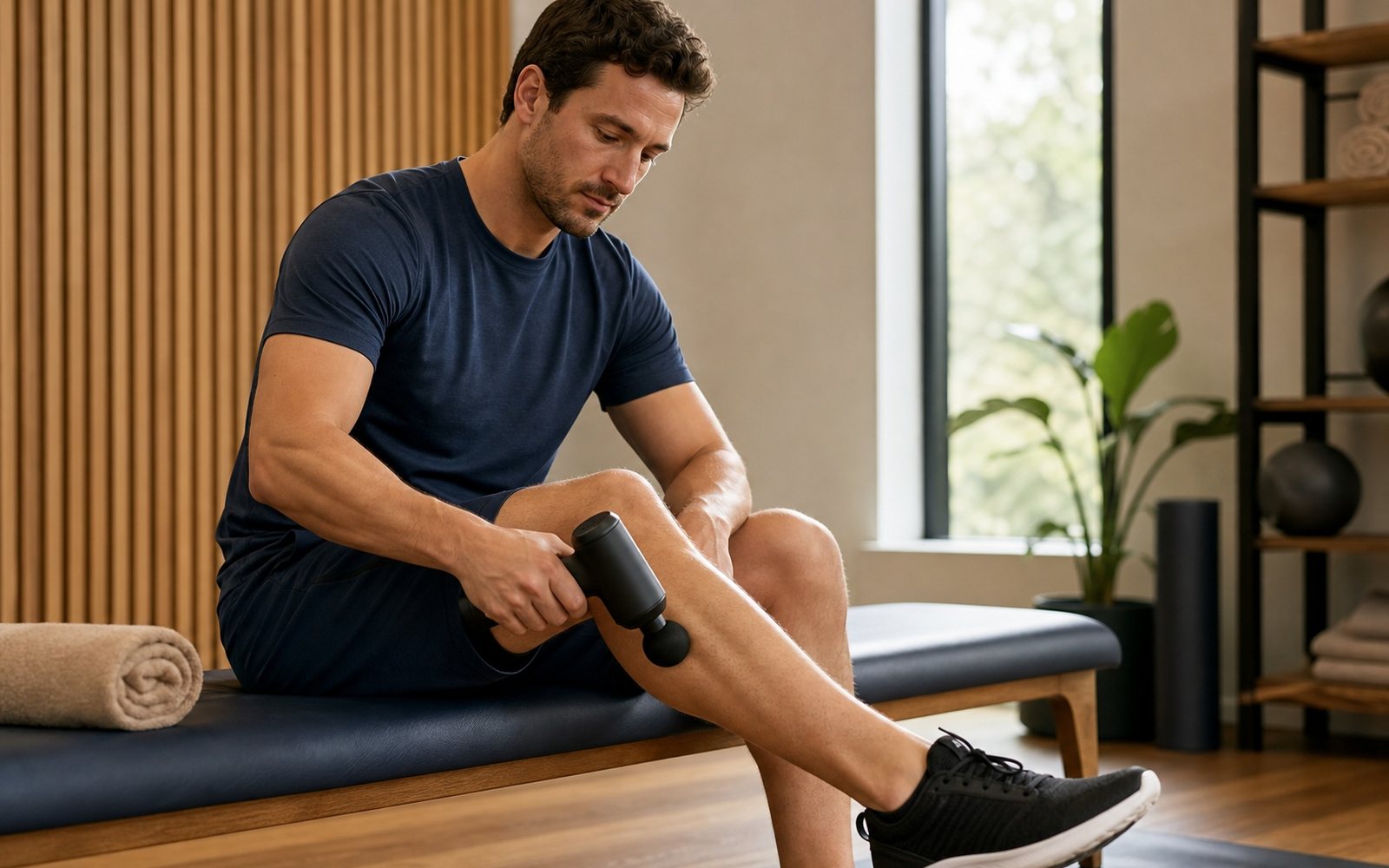
- Massage guns may offer short-term changes in range of motion or perceived stiffness, but evidence remains limited.
- Begin with the lowest setting, light contact, and short passes over broad muscle tissue.
- Never use a massage gun to numb pain so you can continue an aggravating activity.
The evidence is smaller than the sales pitch
A systematic review of massage-gun research found only a small group of eligible studies, many with methodological limitations. Short-term flexibility, range of motion, stiffness, or recovery-related measures may improve in some settings. Effects on strength, balance, speed, and explosive performance were inconsistent, and some results suggested no benefit or a possible decline.
That makes a massage gun an optional comfort tool, not a proven way to accelerate tissue healing or erase the cost of a hard session. It cannot diagnose a knot, move lactic acid out of a muscle, or correct a joint. If you like the sensation, judge it by a practical outcome: does normal movement feel easier afterward?
Start lower than you think
Choose the softest suitable attachment and the lowest speed. Rest the device lightly on a broad muscle and keep it moving rather than pinning one painful spot. Ten to thirty seconds may be enough to sample an area; a minute or two is plenty for most large muscles. The device should not bounce against bone or make you brace.
Pressure that causes grimacing, breath-holding, tingling, or a lingering ache is not a productive dose. The motor already supplies rapid force, so adding heavy hand pressure can quickly turn a mild stimulus into irritation. Recheck a simple motion after one pass. If nothing improves, more speed and pressure are unlikely to reveal a hidden benefit.
A massage gun should feel controlled, not like an endurance test.
Use a conservative body map
Stay on thick muscle areas such as the quadriceps, glutes, and calves. Avoid the head, front and sides of the neck, spine, ribs, abdomen, kidneys, groin, joints, and exposed bones. Do not pass over varicose veins, swollen tissue, open skin, a fresh bruise, or an area with altered sensation. Follow the device instructions as well.
Ask a clinician first if you are pregnant, use anticoagulant medicine, bruise or bleed easily, have osteoporosis, neuropathy, vascular disease, a clotting history, recent surgery, or an implanted medical device near the area. These cautions are not a complete list. Your diagnosis, medicines, and the intended body region change what is sensible.
Do not let relief rewrite the plan
A brief reduction in stiffness can be pleasant, but it does not establish that loading is safe. If running hurts before the device and feels numb afterward, the underlying question remains. Modify the provoking activity and assess the pattern rather than repeatedly masking it. New weakness, marked swelling, severe tenderness, or pain after trauma needs appropriate evaluation.
For ordinary post-training heaviness, compare the device with simpler options: easy movement, a warm shower, food, hydration, and sleep. Keep it only if it offers enough benefit to justify the time and cost. Recovery does not become more scientific because a tool vibrates, and a higher setting does not make the session more advanced. Clean shared attachments according to the manufacturer’s instructions and never use a damaged device, overheated battery, or improvised tip.
Sources
Do not use percussive devices on acute injuries, suspected clots or fractures, open wounds, swollen or infected areas, reduced-sensation tissue, the head, neck, spine, abdomen, or exposed bone. Stop for pain, numbness, dizziness, bruising, or swelling and seek qualified guidance when risk factors or symptoms are present.