Learn the Hip Hinge Before You Load a Deadlift
The deadlift starts with a movement skill: send the hips back, keep the load close, and use a range you can brace before adding weight.
By Moow Editorial ·
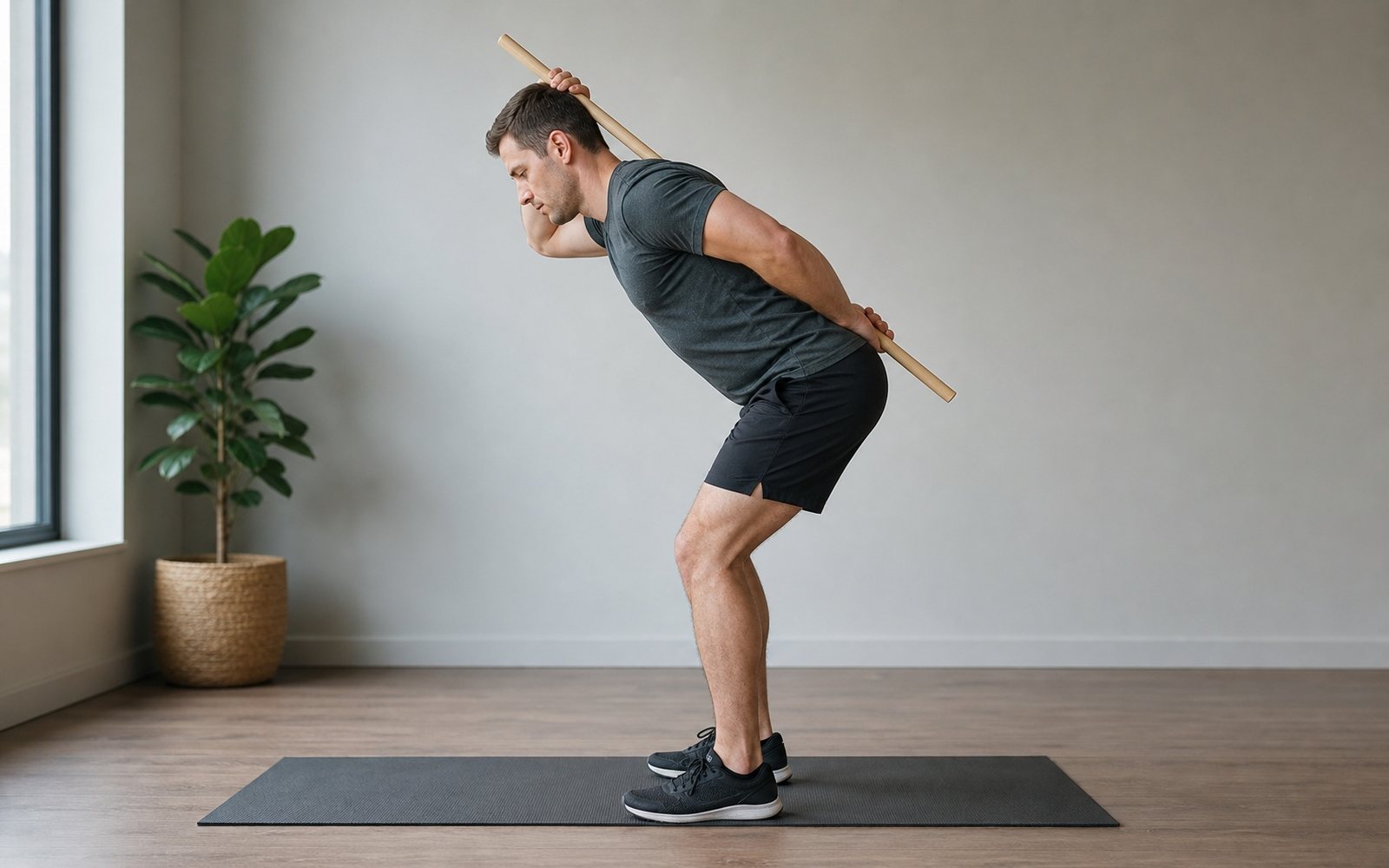
- Practice moving the hips backward before choosing a deadlift load.
- Raise the weight to a height that lets you brace and stay close to it.
- End the set when position or speed changes enough to hide the skill.
Separate the movement skill from the lift
A hip hinge is the pattern of folding mainly at the hips while the trunk stays organized and the knees bend only as much as the task requires. A deadlift is one way to load that pattern. Learning the hinge first reduces the number of problems you must solve at once: you can feel balance, brace, and hamstring tension before also managing a bar, plates, and fatigue.
The goal is not to make the back perfectly flat or frozen. Spines have natural curves and bodies differ. Aim for a trunk position you can hold without a visible collapse or sudden change while the hips travel backward. Keep the whole foot in contact with the floor. If you feel as though you are squatting straight down, the hips may not be moving back far enough.
First own the path; then give the path something to carry.
Use a three-point dowel drill
Hold a dowel along your back so it touches the back of the head, the upper back, and the pelvis. Soften the knees, brace gently, and push the hips toward the wall behind you. Stop before one of the three contact points changes or balance rolls to the heels. Stand by driving the floor away and bringing the hips through, not by leaning backward at the finish.
After several controlled repetitions, practice with a kettlebell or dumbbell raised on a stable step. The higher start reduces the range and makes it easier to keep the weight close. Reach down by hinging, grip securely, take the slack out of the arms, and stand. Put the weight down with the same deliberate sequence instead of treating the lowering phase as an afterthought.
- Brace before the hands reach the load.
- Keep the weight close to the legs throughout the lift.
- Use a raised start until the floor range is controlled.
Choose the first working load
Select a weight you can lift for six to ten repetitions while clearly leaving several good repetitions available. Early sets are practice, so a load that merely feels light is not wasted. Add a small amount only when every repetition begins from the same setup, the load stays close, and you finish without rushing or losing the brace. The hinge should remain recognizable as effort rises.
Use one progression lane at a time. You might add one repetition per set, then a small amount of weight once the top of the range is comfortable. You might instead lower the starting blocks slightly while keeping the load unchanged. Do not simultaneously add range, repetitions, sets, and weight; that turns a simple skill into an uncontrolled experiment.
The right starting weight makes the technique easier to see, not harder to survive.
Recognize the common detours
If the knees travel forward and the hips drop, reset and move the hips toward the wall. If the weight drifts away, bring it closer or reduce the load. If the final position becomes a backward lean, finish tall instead. These are coaching observations, not reasons to panic about one imperfect repetition. Use them to simplify the next attempt rather than layering on five cues at once.
Stop for sharp or radiating pain, numbness, sudden weakness, dizziness, or loss of control. Ordinary muscular effort in the hips, thighs, trunk, and grip is different from symptoms that worsen with each repetition. When pain persists or a previous injury changes the movement, an appropriate clinician can assess it; a qualified coach can then help translate any restrictions into a workable hinge variation.
Sources
Use secure equipment and clear floor space, and do not lift a load you cannot lower under control. Stop for sharp or radiating pain, numbness, sudden weakness, dizziness, or loss of bladder or bowel control; urgent or persistent neurological symptoms require prompt medical care.