Keep a Workout Log That Answers One Question
The best training log is not the one with the most fields. It is the one that helps you answer a useful question and make the next decision with less guesswork.
By Moow Editorial ·
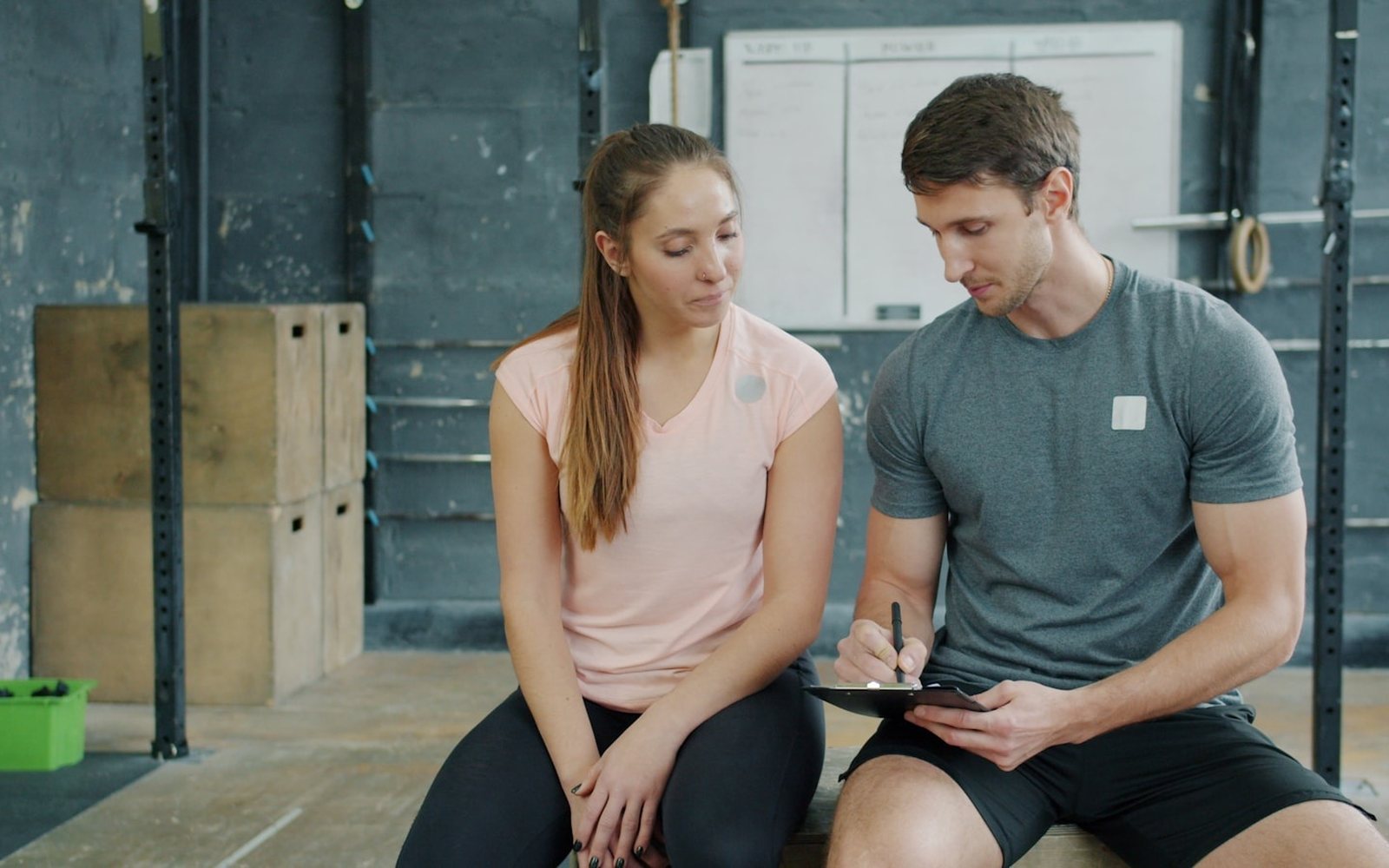
- Choose one decision your log should improve before choosing what to record.
- Capture a small set of comparable fields immediately after the session.
- Review trends across several workouts; do not overreact to one unusually good or difficult day.
Begin with the decision
A log becomes useful when it answers a question such as: am I adding repetitions with the same load, does my knee tolerate this variation, or am I recovering between hard runs? Without a question, tracking expands into an inventory of numbers that looks precise but rarely changes what you do next.
Write the question at the top of the page for the next four to six weeks. Then record only the variables needed to answer it. A strength question may need exercise, load, repetitions, sets, and effort. A pain-tolerance question may need the variation, symptoms during the session, and the response later that day or next morning.
Use the minimum repeatable record
For most resistance sessions, note the exercise, working load, repetitions, number of hard sets, and a simple effort rating. For cardio, time, distance or route, intensity, and one condition note may be enough. Record unusual sleep loss, illness, heat, or equipment only when it could explain why this session differs from comparable ones.
Complete the log while the session is fresh. Free-text essays are hard to compare, so use short labels consistently: comfortable, challenging, or maximal; pain zero to ten; normal or shortened rest. Consistency matters more than laboratory precision. If a field is repeatedly blank or never affects a decision, remove it.
- What did you do?
- How much work did you complete?
- How hard did it feel?
- Was there a symptom or context that changes the interpretation?
Compare like with like
A heavier squat is not automatically progress if depth, equipment, repetitions, and effort all changed. Compare sessions that share the variables relevant to your question. Look for a trend across several exposures: more work at similar effort, the same work with better control, or fewer symptoms after the same dose.
Session ratings can help summarize total training load, but they remain subjective. A difficult score after travel may reflect life stress as much as programming. Use the number as a prompt to investigate, not as a diagnosis. One poor workout is noise; a repeated decline alongside fatigue or symptoms deserves a change.
End every review with one action
Review weekly or after a small block, not between every set. Decide whether the evidence supports a modest progression, another week at the same dose, a reduction, or no change. Write that decision beside the trend. This closes the loop between recording and coaching instead of turning the log into an archive.
Tracking should support training, not dominate it. If numbers trigger compulsive checking, guilt, food restriction, or anxiety about imperfect sessions, simplify or pause the log and discuss the pattern with a qualified professional. The goal is a clearer next decision and a more sustainable practice—not a complete numerical account of your body. A notebook, spreadsheet, or app can all work. Choose the format you will actually use, and keep sensitive health notes private, backed up, and limited to what the question requires. Delete unused fields promptly.
Sources
A workout log cannot diagnose injury, illness, overtraining, or an eating disorder. Seek appropriate care for persistent pain, declining function, fainting, chest pain, severe breathlessness, compulsive exercise, or tracking that is driving distress or harmful restriction.