Inclusive Fitness Language: Coach the Action, Not the Body
Clear coaching describes the task a person can try, not a judgment about the body performing it. Ask, observe, and offer options without turning appearance into instruction.
By Moow Community ·
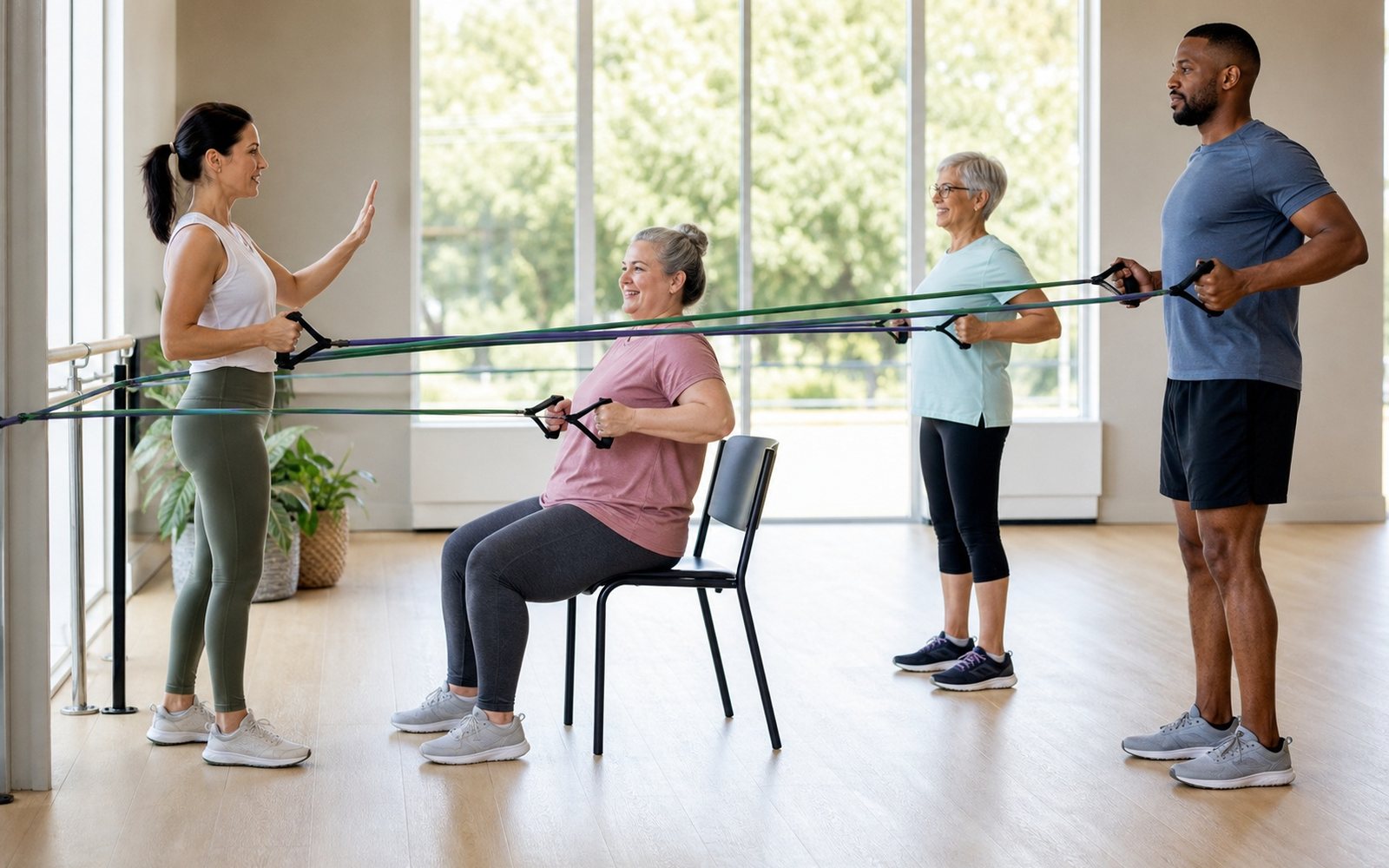
- Cue observable actions—tempo, direction, range, and effort—instead of commenting on appearance.
- Ask about preferences, access needs, and goals; do not infer capacity from identity or body size.
- Offer equivalent options without presenting one as the embarrassing or inferior version.
Describe what the person can do next
Useful coaching language points to an observable action: slow the lowering phase, keep pressure through the whole foot, choose a range you can control, or pause when the effort reaches seven out of ten. These cues give the participant something testable. Comments about looking fit, burning off food, or fixing a body part do not explain the task.
Appearance-based language can also redirect attention from skill and health toward surveillance. Even a compliment may land differently for someone managing an eating disorder, gender dysphoria, weight stigma, pregnancy changes, or illness. Praise choices and performance that you actually observed: preparation, communication, consistency, control, or a well-timed decision to stop.
Ask before you assume
A person’s age, body size, assistive device, diagnosis, or visible disability does not tell you their goal or capacity. Ask what they want from the session, what movements are familiar, whether they want hands-on assistance, and what equipment or communication format helps. Let the participant describe their own body and preferred terms.
Language preferences are not universal. Some people prefer person-first wording, while others use identity-first language. Use the terms an individual or community requests when you know them, and correct yourself briefly when you miss: acknowledge, use the requested wording, and continue. A long defense makes the participant manage the coach’s discomfort.
Respectful coaching is specific, collaborative, and willing to update.
Present options as legitimate routes
Offer two or three versions tied to the same purpose: a standing or seated press, a step or roll pattern, a loaded or unloaded hinge, a shorter or longer interval. Explain what changes—balance demand, load, impact, or range—without naming one the real exercise and the other the easy version.
Place options in the original instruction rather than waiting for someone to disclose a diagnosis publicly. Check that the room, equipment layout, captions, demonstrations, and pacing support participation. Inclusion is not only vocabulary; a welcoming cue cannot repair stairs without an alternative route or instructions that only one sensory format can access.
Correct behavior and improve the culture
If a participant makes a stigmatizing comment, address the behavior without debating another person’s body. State the boundary and redirect: “We do not label bodies here; tell us what movement felt different.” Group leaders should apply the same standard to jokes, before-and-after commentary, and assumptions about food, gender, disability, or health.
Invite feedback privately and review repeated patterns. One script cannot cover every culture or identity, and guidance evolves. Community members should not have to repeatedly educate leaders, so use authoritative resources and compensate advisers when formal input is requested. The coaching goal remains stable: clear action, informed choice, dignity, and meaningful access. Add captions, readable text, descriptive image alternatives, and more than one way to receive instructions. Ask whether the adjustment worked rather than assuming that offering it completed the accessibility task. Accessibility remains an ongoing conversation.
Sources
Inclusive language does not replace individualized screening, consent, accessibility, or qualified medical guidance. Never pressure someone to disclose a diagnosis or identity to receive an exercise option, and obtain explicit consent before touch or hands-on assistance.