Handle Bedtime Hunger Without a Heavy Meal
Late schedules happen. Respond to hunger with familiar food and a comfortable amount, then look for an easier meal plan if the same problem keeps returning.
By Moow Editorial ·
- Sleep guidance allows a light snack while advising against heavy or large meals close to bedtime.
- Choose familiar food and respond to your needs; a bedtime rule should not make you skip a needed meal.
- Follow individual nutrition guidance and get advice for recurring reflux or discomfort.
Try tonight: respond to the hunger you have
Dinner ran late, work interrupted a meal, or you are simply hungry again. Start with the situation in front of you. The National Heart, Lung, and Blood Institute advises avoiding heavy or large meals within a few hours of bedtime and explicitly allows a light snack.
That guidance is flexible enough to leave room for your needs. A snack may fit when you want a little food. If you missed dinner, a simple meal may be appropriate. Follow any individual nutrition or medical plan that affects when and how much you eat.
- Choose familiar food you enjoy and usually tolerate comfortably.
- Use a modest snack if that meets your needs, or a comfortable meal portion if you need a meal.
- Eat at an unhurried pace and allow more food if you still need it; bedtime is not a reason to ignore hunger.
Keep the choice ordinary
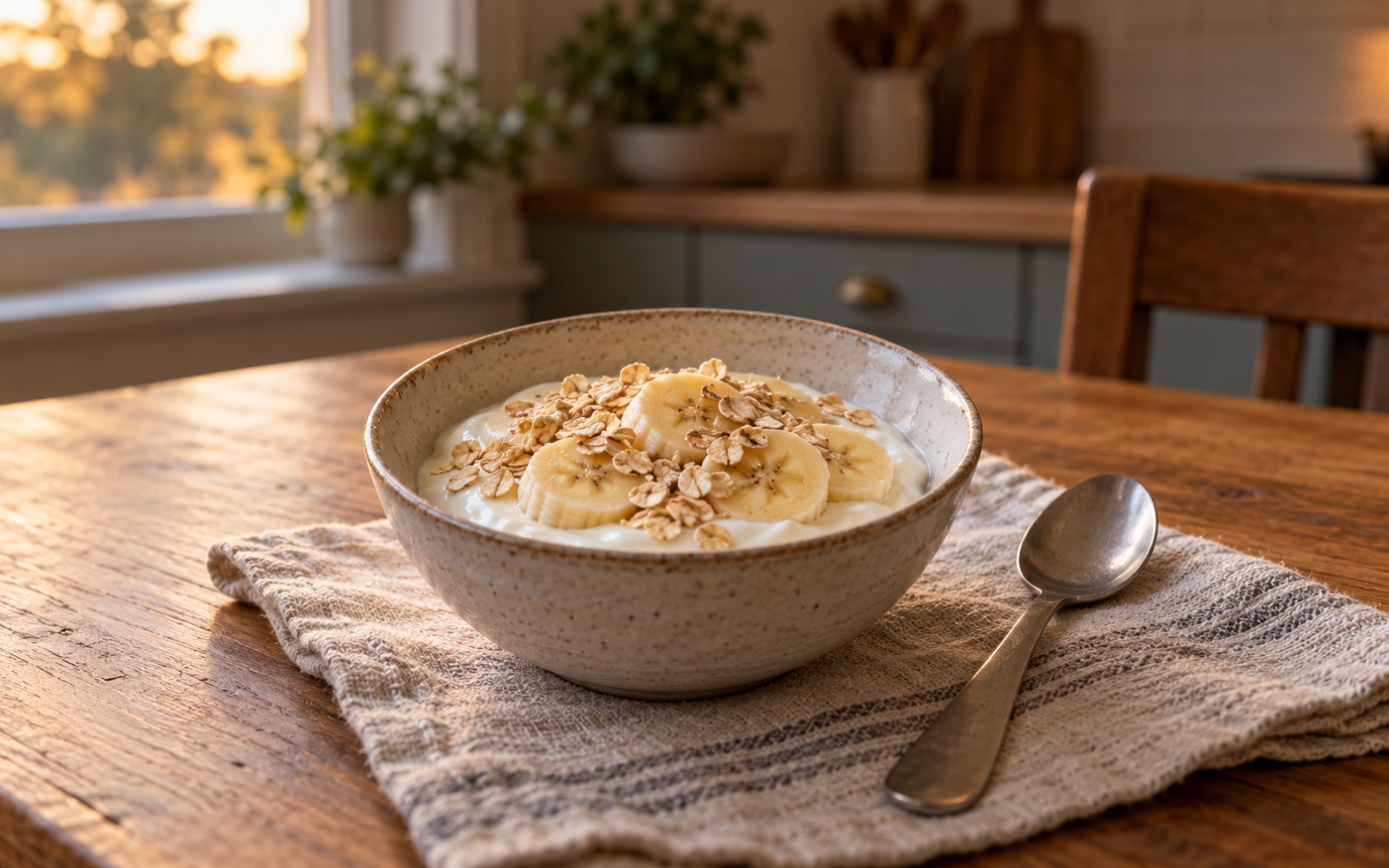
Possible snacks include toast, a banana, or a small bowl of yogurt with oats if those foods suit you. A familiar sandwich or leftovers may be more useful after a missed meal. The examples are optional conveniences, with no special sleep effect attached to them. Choose around allergies, dietary preferences, access, and your usual tolerance.
There is no need to shop for a sleep food or add a supplement. The useful decision is what meets your hunger without leaving you uncomfortably full. A food that feels comfortable for someone else may not work for you, and the same portion will not suit every evening.
Make the next late evening easier
When large late meals are a recurring result of your schedule, look upstream. Could you bring a meal to work, keep an easy option at home, or eat something during an earlier break? Pick one change that is realistic for your hours. Shift work, caregiving, and commuting can limit how much control you have.
Keep food available for the nights when plans change. Avoid a universal kitchen-closing time that leaves you without needed food after a delay. On evenings with more flexibility, arrange substantial meals earlier where practical. The aim is to reduce a repeated scheduling problem while preserving adequate eating.
Use comfort as information
If eating near bedtime repeatedly leaves you uncomfortable, notice what was different: the meal's size, timing, or foods. Use that information to discuss the pattern with a clinician or registered dietitian. Recurring reflux or discomfort deserves advice; repeatedly removing foods on your own can make eating harder without explaining the problem.
An individualized plan for diabetes, medication timing, pregnancy, or eating-disorder recovery takes priority over general bedtime guidance. Regular sleep difficulties also warrant a healthcare conversation. A food decision can make the evening more manageable, but it cannot establish why sleep is disrupted or promise a better night.
Sources
Follow your prescribed nutrition and medication plan, including guidance for diabetes or eating-disorder recovery. Seek qualified advice for recurring reflux, discomfort, or sleep difficulties rather than skipping needed food or adding stricter eating rules.