How to Give Form Feedback Without Pretending to Diagnose
Useful form feedback is invited, specific, and limited to what you can observe. Help someone test one cue without naming an injury or promising safety.
By Moow Community ·
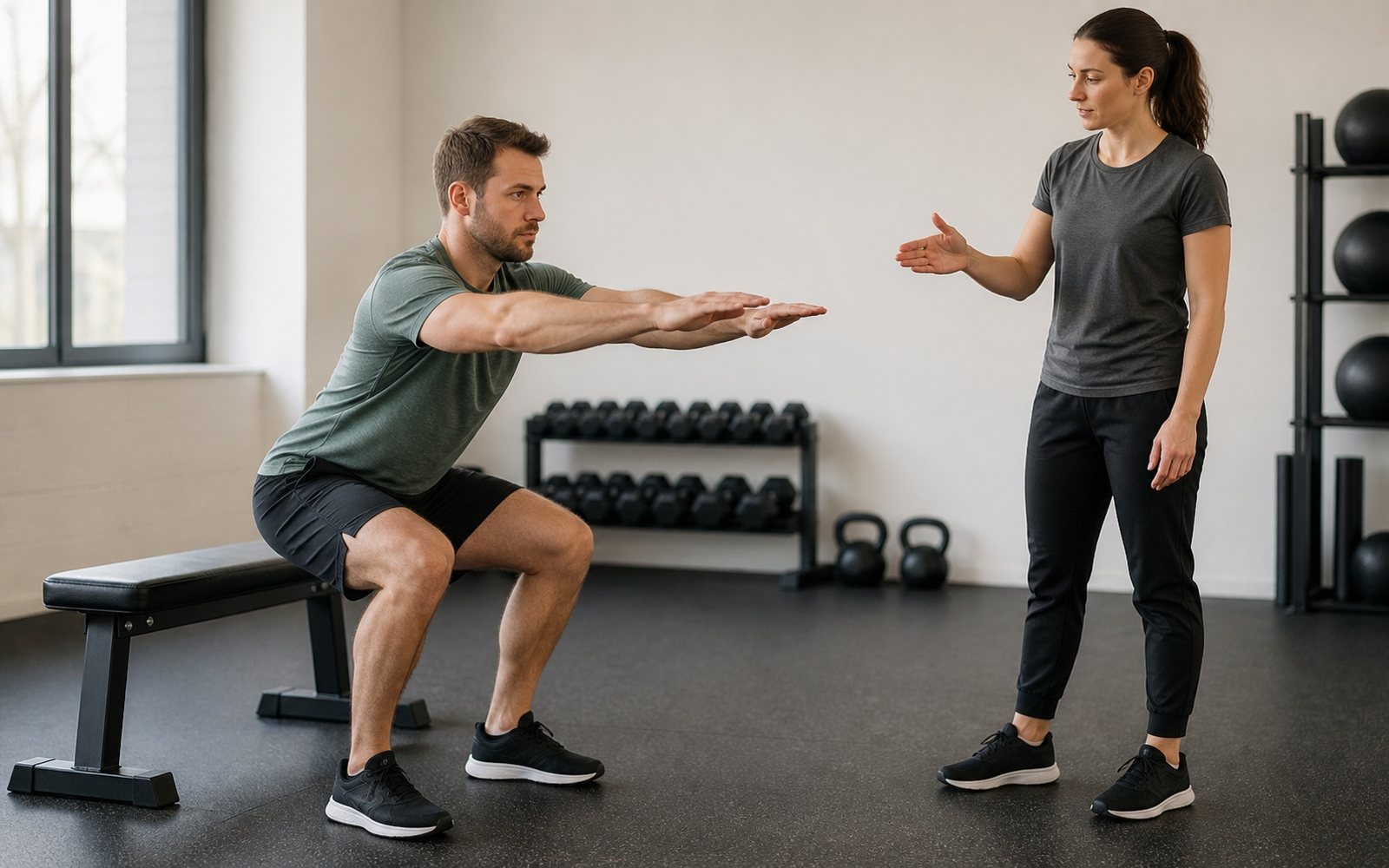
- Ask whether feedback is wanted and what kind would help.
- Describe one visible behavior before suggesting one low-risk experiment.
- Refer pain, neurological symptoms, and injury questions to qualified care.
Ask before coaching
Seeing a movement does not create permission to correct it. Ask, 'Would you like an observation, encouragement, or no feedback right now?' The person may be following a clinician's instruction, practicing a variation you do not recognize, or simply trying to finish privately. Consent makes the exchange useful and can be withdrawn at any time.
Clarify the goal. Someone asking whether the camera angle is clear has not necessarily asked you to redesign the exercise. A friend who wants one setup cue may not want a full critique. Match the response to the request and your actual experience. Saying 'I do not know' protects trust better than filling uncertainty with confident anatomy language.
Permission to watch is not automatically permission to coach.
Describe before you interpret
Begin with what the video or your eyes can show: 'Your heels lift on the last two repetitions' or 'the bar moves farther from your legs as the set continues.' Avoid declaring that a joint is unstable, a muscle is inactive, or an injury is developing. A visual observation cannot establish those diagnoses.
Connect the observation to the person's stated goal. If they want repeatable squat depth, suggest using a stable target. If the final repetitions change, suggest ending the set earlier or reducing load. Offer one experiment and let them report how it feels. Five simultaneous cues make it difficult to know which change helped.
- Observation: name one visible, time-specific detail.
- Context: connect it to the person's goal.
- Experiment: offer one reversible change, then ask what changed.
Keep safety claims narrow
Do not promise that a repetition is safe because it looks familiar. Camera angle can hide load, speed, pain, fatigue, and relevant medical history. You can suggest basic equipment precautions—secure the rack, use catches, clear the floor—without certifying the movement. The person doing the exercise remains the primary source on symptoms.
When pain is sharp, worsening, radiating, or accompanied by numbness, weakness, swelling, or instability, stop the peer-coaching process. Recommend appropriate clinical assessment without guessing the condition. Chest discomfort, faintness, severe unusual breathlessness, or sudden neurological symptoms can require urgent action; a form cue is not the response.
A video can support coaching; it cannot rule out injury or illness.
Make the exchange human
Use neutral language about the action rather than the person's body or competence. 'Try a lighter load and see whether the range stays consistent' is more useful than 'your mobility is terrible.' Praise effort only when it does not pressure someone to continue. The right response to a stop signal is support, not a speech about toughness.
If feedback happens in a group, keep the video private unless the person explicitly chooses otherwise. Do not repost, annotate publicly, or invite a crowd of diagnoses. A strong training community makes it easy to ask, decline, test, and refer. Its members know that being helpful includes knowing when their role ends.
Sources
Peer feedback cannot diagnose injury or certify that movement is safe. Stop for sharp or radiating pain, numbness, weakness, swelling, instability, chest discomfort, faintness, or severe unusual breathlessness. Urgent symptoms need appropriate emergency care, not an online form review.