Exercise for Stronger Bones: Load, Impact, and Progression
Bone-focused exercise combines weight-bearing movement, resistance training, and appropriately scaled impact—then progresses slowly enough to repeat.
By Moow Editorial ·
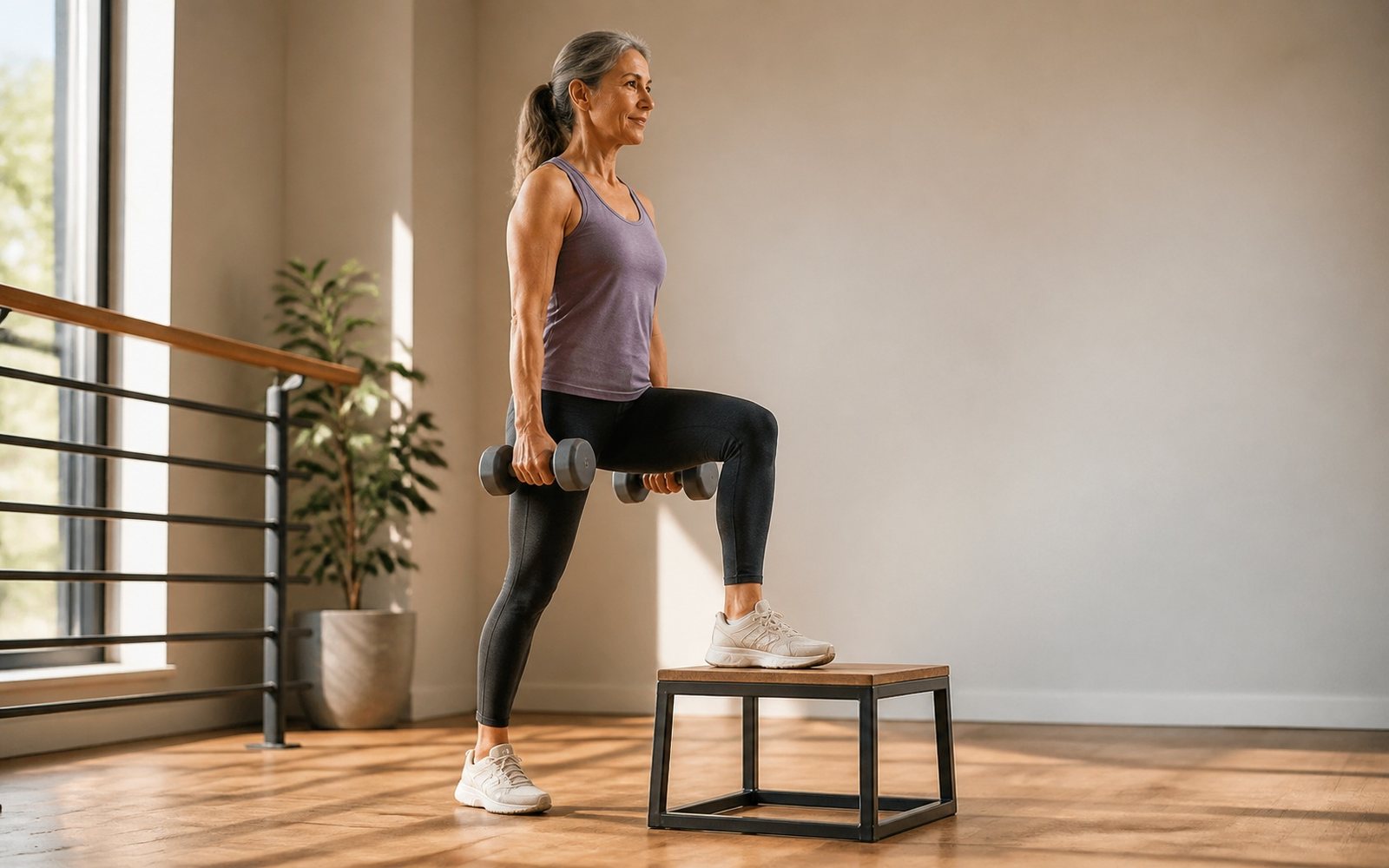
- Combine resistance and weight-bearing activity rather than relying on one exercise.
- Scale impact to bone health, joint tolerance, and current skill.
- Progress loading gradually and support it with adequate recovery and nutrition.
Bone responds to varied mechanical loading
Bone is living tissue. Weight-bearing activity and muscle contractions expose it to forces that help support strength, while inactivity reduces that stimulus. The useful program is not a single miracle move. It combines regular movement with progressive resistance and, when appropriate, faster or higher-impact loading.
Swimming and cycling can be excellent for cardiovascular fitness, yet the body is largely supported while doing them. If bone health is a goal, include activities performed on your feet and resistance exercises that load major regions of the body. Choose options you can perform consistently, not the most dramatic exercise on a list.
Start with strength and weight-bearing work
Build around squat or sit-to-stand patterns, hinges, steps, pushes, pulls, carries, and calf work. Machines, free weights, bands, and body weight can all create resistance. Use a range of movement you can control, and add repetitions or load only when technique remains stable across the session.
Walking, stair climbing, hiking, dancing, and court activities are examples of weight-bearing movement, although their demands differ. Brisk walking may be a sensible entry point; it should not be marketed as a complete strength program. Two or more weekly strength sessions can complement regular aerobic activity for many adults.
Earn impact through preparation
Impact ranges from firm heel drops and quick steps to hops, jumps, and sport. It is not automatically appropriate for everyone. First establish balance, landing control, leg strength, and tolerance to lower-level weight-bearing work. Then use small doses with full recovery rather than adding hundreds of contacts at once.
A progression might move from marching to faster step-ups, then to small two-foot landings if health and skill allow. Land quietly with knees following the feet and stop the set before fatigue changes control. People with osteoporosis, prior fragility fractures, or significant joint conditions need individualized guidance about impact and spinal loading.
Measure a dose you can repeat
Track exercise selection, resistance, repetitions, and any impact contacts. Progress one feature at a time and leave recovery between demanding sessions for the same tissues. Bone adaptation is slow, so a few symptom-free weeks are not a reason to leap several stages. Consistency across months matters more than one punishing workout.
Exercise works alongside nutrition, sleep, and appropriate medical care. Calcium and vitamin D are relevant, but supplements do not replace loading and are not automatically needed. If fracture risk, medication, menstrual changes, or a medical condition affects bone health, coordinate training with a clinician who understands your history.
Sources
If you have osteoporosis, low bone density, a fragility fracture, unexplained bone pain, or major balance limitations, get individualized guidance before adding impact or loaded spinal bending and twisting. Sudden severe pain after a landing or lift needs prompt assessment.