The Caregiver Who Counted Ten-Minute Walks
This illustrative composite—not a user testimonial—shows how one caregiver stopped waiting for a free hour and built short walks around the responsibilities already on the calendar.
By Moow Editorial ·
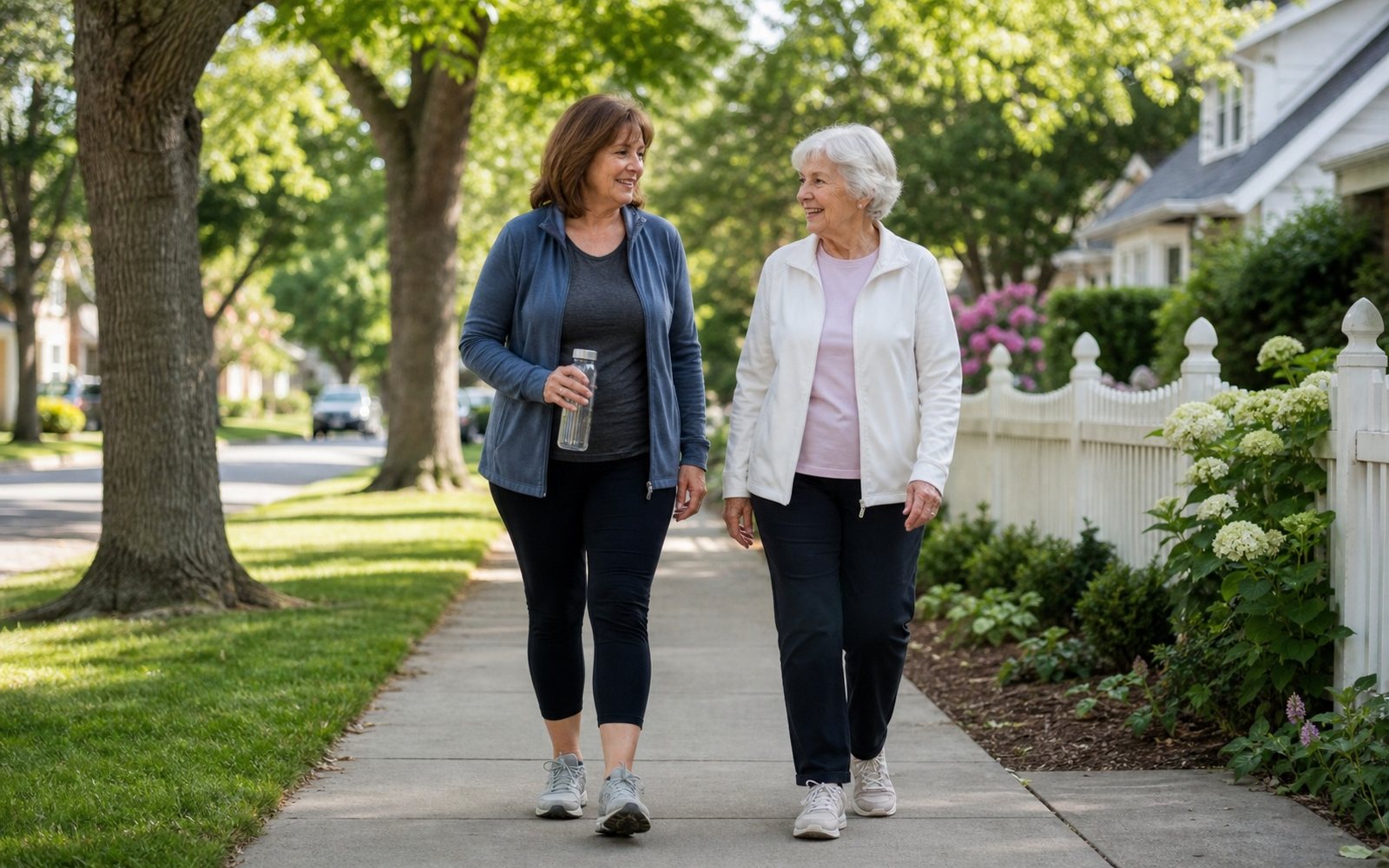
- Short activity bouts count; ten minutes is a practical unit, not a physiological minimum.
- Attach movement to dependable openings and prepare a smaller option for difficult days.
- Caregiving load and personal health shape what is safe, so flexibility matters more than a perfect streak.
The hour that never appeared
This story is a fictional composite created to illustrate a planning method; it does not describe a Moow member or promise an outcome. Sam cared for an older relative, worked irregular hours from home, and kept planning a forty-five-minute walk after dinner. Medication changes, calls, and fatigue repeatedly took that window away.
Sam first treated each missed long walk as evidence that the week had failed. The training plan stayed untouched because it was built for an imaginary empty evening. A more useful review showed several short, predictable openings: after the morning care handoff, while a prescription was prepared, and before starting dinner. None was large enough for the original plan.
Ten minutes became a container
Federal guidance no longer requires physical activity to occur in bouts of at least ten minutes; activity of any duration can contribute. Sam chose ten minutes because it fit the nearby block, not because nine minutes would be worthless. The route was a familiar loop that stayed close enough to return if plans changed.
The weekly target began with three opportunities, each with a five-minute alternative. Shoes stayed beside the door, and the cue was an event rather than a clock time: when the handoff ended, walk before opening the laptop. On higher-demand days, the alternative was a few minutes outdoors or movement inside the home.
The useful unit is the one that fits safely and can be repeated.
The record counted opportunities, not virtue
Sam marked completed minutes and one short context note—normal day, interrupted, or recovery needed. The record made accumulated activity visible without requiring a daily streak. Three ten-minute walks were thirty minutes of movement, while a missed opportunity remained one scheduling fact rather than a character judgment.
The log also showed which windows were unreliable. Pharmacy waits varied too much, but the morning handoff occurred most weekdays. Sam protected that cue and stopped planning punishment walks after a disrupted day. The next available opportunity simply remained on the calendar. This approach did not remove caregiving strain; it made the movement plan more honest about it.
Build only when the week allows
After several manageable weeks, a person using this model might add one opportunity, extend one walk, or keep the same dose. The right choice depends on symptoms, recovery, schedule, and current activity. Public-health targets describe a direction and broad health benefits; people who are inactive can begin with smaller amounts and work upward over time.
Caregivers may also need respite, medical support, or help from family and community services—not merely better time management. Anyone with chest pain, fainting, severe breathlessness, unstable health, or a recent major medical event should seek appropriate guidance before progressing. Short walks are flexible tools, not a test that overrides care needs. A safe plan also accounts for footwear, lighting, traffic, weather, phone access, and whether the person receiving care can be left alone for that interval.
Sources
This fictional composite is educational, not individualized advice or a testimonial. Begin with activity appropriate to your health and environment; stop for chest pain, fainting, severe or unusual breathlessness, or new neurologic symptoms and seek urgent care when indicated.