The Best Home Workout Equipment for a Small Space
Buy movement options, not a miniature gym: one adjustable load, two kinds of bands, a mat, and a stable support cover most beginner routines.
By Moow Editorial ·
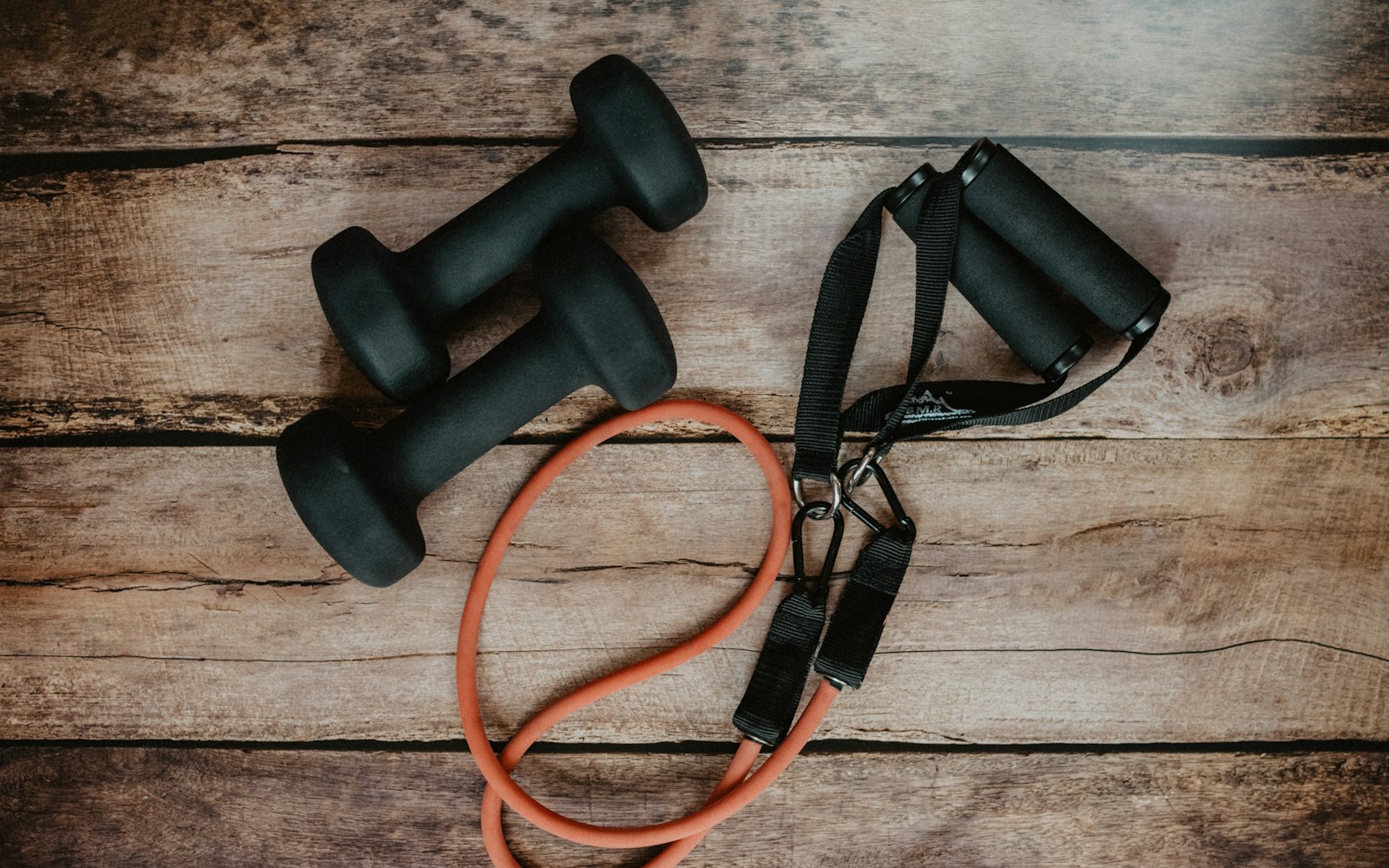
- Choose equipment by the movements it unlocks, not by how impressive it looks.
- A compact five-piece kit can support years of useful progression.
- Test storage, stability, and setup friction before buying another tool.
Buy movement options, not machines
For most small homes, the best first setup is a long resistance band, a mini loop, an adjustable dumbbell or kettlebell, an exercise mat, and a genuinely stable step or support. That combination can cover squatting, hinging, pushing, pulling, carrying, core work, and mobility without permanently surrendering a room.
The buying test is simple: every purchase should either unlock a movement you cannot currently do or make progression easier to measure. A bulky machine that performs one exercise poorly earns less space than a load you can carry, press, row, and squat. Bodyweight training remains a valid starting point, so there is no need to buy everything at once.
If you cannot name three exercises you will do with an item this month, leave it in the shop.
What each piece earns its place by doing
A long band makes rows, presses, pulldowns, and assisted variations possible; a mini loop adds light resistance around the hips. An adjustable free weight gives clearer loading for hinges, squats, presses, rows, and carries. A mat improves comfort rather than results, while a stable support can enable incline push-ups, step-ups, and split squats.
Choose resistance you can control through the intended range rather than the heaviest option you can move once. ACSM's 2026 guidance emphasizes regular, high-effort resistance work across the major muscle groups and notes that bands, bodyweight, and home-based routines can all be effective. The tool matters less than whether it permits safe, repeatable progression.
- Long band: pulling, pressing, assistance, and travel
- Mini loop: lateral steps, hip work, and warm-ups
- Adjustable load: measurable strength progression and carries
- Mat: floor comfort and a clear workout zone
- Stable support: incline, step, balance, and single-leg options
Build the kit in stages
Start with the movement that is hardest to load at home. For many people that is pulling, which makes a long band a sensible first purchase; for others it is lower-body strength, where an adjustable dumbbell may add more value. Use the first item for two weeks before deciding what is actually missing.
Measure the available floor area and the storage area separately. A bench may fit during a workout yet block a hallway between sessions. Check the full footprint of adjustable weights, confirm that floors can tolerate the load, and remember that quiet equipment may matter in an apartment. Convenience is a training variable because equipment stored awkwardly is used less often.
The best-value kit is the smallest one that lets you train every major movement and add difficulty gradually.
Make safety part of the buying decision
Inspect bands for thinning, cracks, and damaged seams before each use, and anchor them only to a point designed to resist the direction of pull. A dining chair on a slippery floor is not a step. Test supports with bodyweight first, keep the training area clear, and avoid overhead work where lights, fans, or low ceilings create a hazard.
Upgrade when the current tool prevents useful progression, not because a new product is trending. That may mean a heavier adjustable load, a safer anchor, or a second band tension. It rarely means replacing a compact, consistent routine with a complex machine. If balance, bone health, pain, or a medical condition changes what is safe, seek individualized guidance before adding load.
Sources
Check bands, anchors, floors, and supports before loading them. Anyone with significant balance limitations, recent injury, unexplained pain, or a condition affected by resistance exercise should get individualized advice before choosing equipment or load.