AI Coach or Human Coach? Know What Each One Does Best
Software can organize patterns and repeat clear cues. A skilled human can assess context, uncertainty, and risk. The strongest choice starts by knowing which job you actually need done.
By Moow Editorial ·
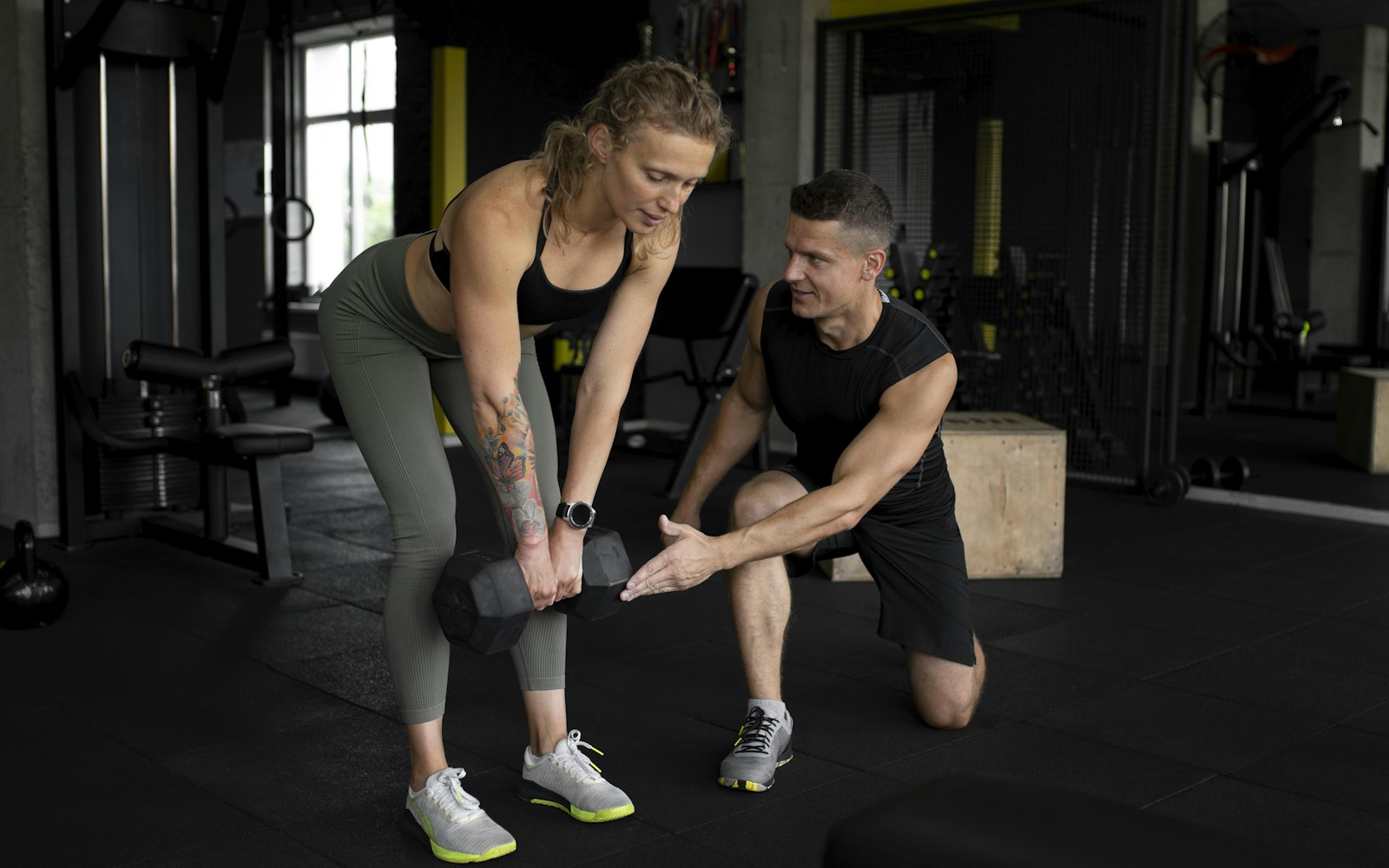
- Use software for repeatable structure, logging, reminders, and bounded cues.
- Use a qualified human when assessment, pain, complex technique, or accountability needs judgment.
- Treat camera feedback as an estimate constrained by angle, lighting, and supported movements.
Start with the job, not the label
“AI coach” can describe very different products: a chat interface, a plan generator, a camera model, or rules that adapt a daily card. None is automatically equivalent to a person who watches you move, asks follow-up questions, understands your training history, and changes the plan in real time. The fair comparison is between specific tasks, not between two grand titles.
Software is well suited to repeatable work: keeping a session organized, counting completed sets, reminding you of rest time, summarizing a log, and presenting one bounded cue for a supported movement. It can be available whenever you train and apply the same rule consistently. Those strengths are valuable precisely because the scope is narrow and the limitations can be stated.
Human judgment matters when the context changes
A qualified coach can see that the written goal conflicts with the real schedule, notice fear after an injury, choose an exercise around discomfort, and ask why performance changed. They can physically inspect the environment, demonstrate alternatives, and distinguish a motivation problem from a programming problem through conversation. Professional scope also matters: coaches do not diagnose illness, and healthcare professionals do not all specialize in training.
Choose human help for persistent pain, return from injury, complex or heavy lifts, sport-specific technique, major uncertainty, or when accountability depends on a relationship. Credentials and experience should match the task. A confident personality is not evidence of competence, and an app disclaimer does not turn a weak recommendation into a safe one.
- Software: session structure, logs, reminders, bounded pattern detection.
- Coach: programming judgment, observation, communication, and live alternatives.
- Clinician: diagnosis, treatment, rehabilitation, and medical risk management.
- You: consent, symptoms, preferences, goals, and the final decision to continue.
A camera sees pixels, not the whole situation
Camera feedback depends on framing, lighting, clothing, body visibility, camera angle, and whether the exercise is supported by the model. Occlusion can hide a joint; a two-dimensional view can flatten depth; a technically acceptable movement can look different across bodies. A counted repetition does not prove the load was appropriate, the exercise was pain-free, or the session matched the larger goal.
Use camera cues as prompts to check, not verdicts. If the system says “keep your back straight,” ask whether the camera can actually see the relevant position and whether the cue improves the next repetition. Stop using the feature when it distracts from safe control. No score should persuade you to continue through pain or override direct guidance from an appropriate professional.
Useful AI makes its boundary visible. If a system cannot say what it saw, what it inferred, and where it may be wrong, treat the output cautiously.
The honest status of Moow’s form coach
The form-coach interface under development supports camera permission, phone-placement guidance, a set of named exercises, an on-device camera view, calibration messaging, general cues, and a manual rep-count fallback. It states that automatic pose counting requires a production device build. Raw camera recordings are not uploaded or saved by default; on-device processing is the intended path where supported.
That is a product workflow under development, not a claim of human-level assessment or a validated injury-prevention system. The right role is bounded assistance during supported exercises, alongside manual workout tracking. Before broader release, exercise coverage, device behavior, false cues, privacy behavior, and failure states need real validation. When the task exceeds that scope, the app should say so and direct the person to human help.
Sources
Camera or chat feedback cannot assess pain, diagnose injury, clear you for exercise, or respond like an in-person professional during an emergency. Stop for pain, dizziness, instability, or concerning symptoms and seek the appropriate qualified help.